The barbershop industry in the United States generates over $6 billion in annual revenue, and demand for barber services continues to grow as more men invest in grooming and personal care. If you’re thinking about opening your own shop, one of the first questions you need to answer is: how much does it cost to open a barbershop?
The short answer is that most barbershops cost between $50,000 and $150,000 to open, depending on your location, the size of your shop, and how much renovation work is needed. A small, no-frills shop in a low-cost area might get started for $25,000 to $40,000, while an upscale barbershop in a major city could run well over $200,000.
This guide breaks down every major barbershop startup cost — from your lease and build-out to equipment, licensing, insurance, and monthly operating expenses. You’ll also find tips for reducing costs, financing options, and a look at whether owning a barbershop is actually profitable.
The total cost to open a barbershop depends on dozens of factors, but here’s a general range based on the type of shop you’re planning:
| Shop Type | Estimated Startup Cost | Best For |
|---|---|---|
| Small / Budget Shop (1-2 chairs) | $25,000–$50,000 | Solo barbers, low-cost areas |
| Mid-Range Shop (3-5 chairs) | $50,000–$100,000 | Most independent barbershops |
| Upscale / Premium Shop (5+ chairs) | $100,000–$200,000+ | High-end grooming experiences |
| Franchise Barbershop | $150,000–$350,000+ | Established brand recognition |
These numbers include one-time startup costs like your lease deposit, renovations, equipment, and initial marketing — but not your monthly operating expenses, which we’ll cover separately below.
Keep in mind that your biggest variable is location. A barbershop in a small town in the Midwest will cost significantly less to open than one in downtown Los Angeles or New York City.
Let’s walk through every major expense you’ll face when opening a barbershop. This breakdown covers one-time costs only — we’ll get into monthly operating expenses in the next section.
Your lease is typically the single largest upfront expense. Most landlords require a security deposit equal to 2-6 months of rent, plus first and last month’s rent upfront.
For a 600 to 1,200 square foot barbershop space, expect to pay $1,500 to $4,500 per month in rent depending on your market. That puts your upfront lease costs (deposit + first/last month) at roughly $4,500 to $27,000.
Rent varies dramatically by location. In states like Texas or Ohio, you might find a suitable space for $1,200 to $2,000 per month. In New York City or San Francisco, the same space could cost $4,000 to $8,000 or more.
Unless you’re taking over an existing barbershop, you’ll need to renovate the space to include plumbing for wash stations, proper electrical wiring, flooring, lighting, mirrors, and cabinetry.
Minor renovations (paint, lighting, cosmetic updates) typically cost $5,000 to $15,000. A full build-out of a raw space — including plumbing installation, new flooring, custom cabinetry, and a waiting area — can run $15,000 to $50,000 or more.
One way to reduce this cost significantly is to find a space that was previously used as a barbershop or salon. The plumbing and electrical infrastructure may already be in place, which can save you $10,000 to $20,000.
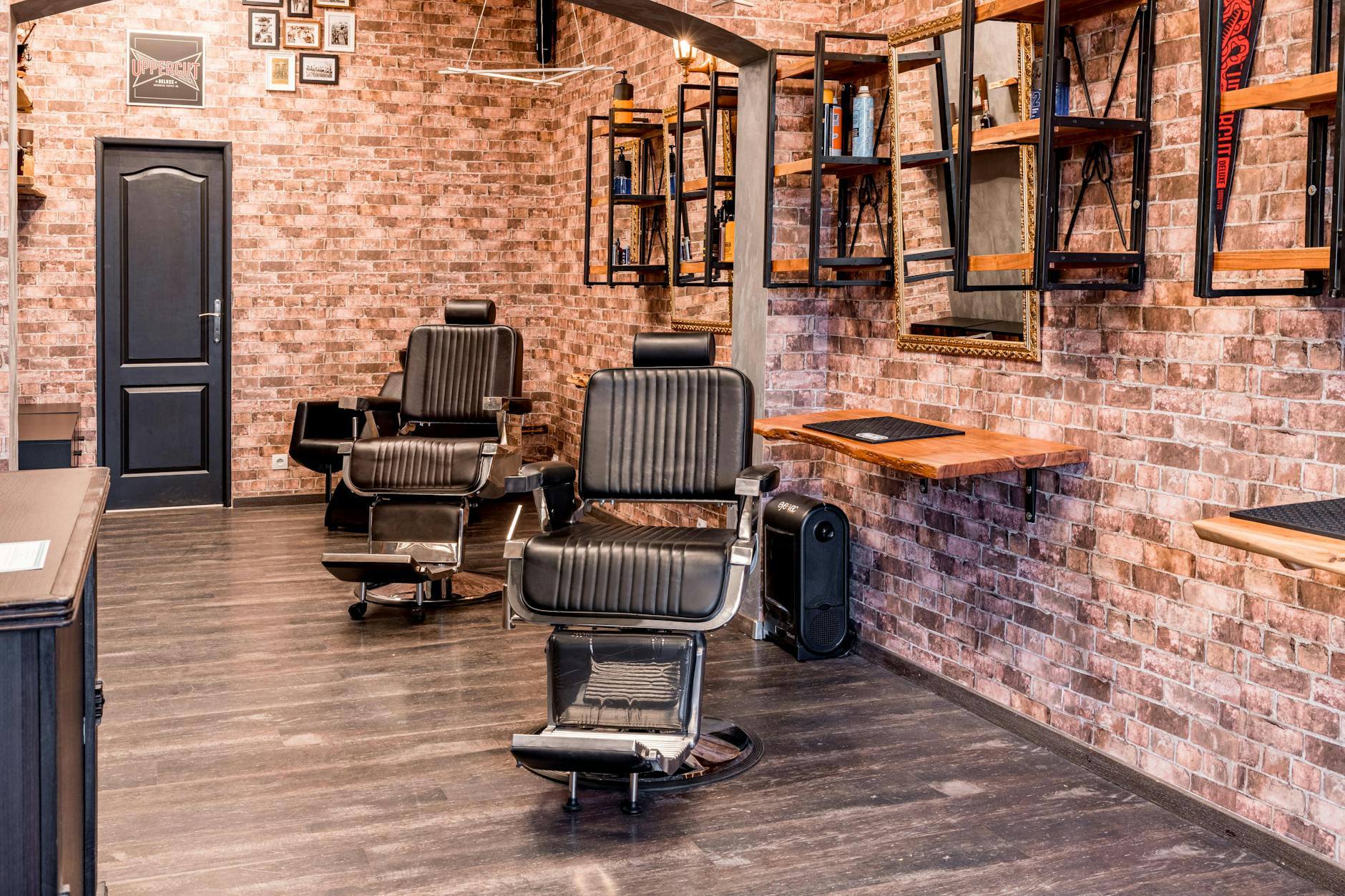
Quality barber chairs are a major investment because they’re the centerpiece of your shop and directly affect client comfort. Budget hydraulic barber chairs start around $300 to $500 each, while mid-range chairs cost $700 to $1,200. High-end vintage or premium chairs can run $1,500 to $2,500 each.
Beyond chairs, each station needs a mirror, counter or shelf, tool holders, and possibly a styling station cabinet. For a 3-chair shop, plan to spend $3,000 to $10,000 total on chairs and station equipment.
Every barber needs a core set of professional tools: clippers, trimmers, shears, razors, combs, brushes, capes, neck strips, disinfectant, and styling products. A complete tool kit for one barber typically costs $500 to $1,500.
For initial product inventory (pomades, gels, aftershaves, shampoos, and retail items), budget another $1,000 to $3,000. Restocking supplies will become a monthly expense once you’re open.
Before you can legally operate, you’ll need several licenses and permits. The specific requirements vary by state and city, but most barbershops need:
Total licensing costs (assuming you already have your barber license) typically range from $200 to $1,000. If you still need to attend barber school, add $10,000 to $20,000 to your budget.
Requirements vary widely by state, so check with your state’s barber board for the exact licenses you need before signing a lease or investing in equipment.
Business insurance protects you from liability claims, property damage, and other risks. Most barbershops need general liability insurance and professional liability (malpractice) insurance at a minimum. Many landlords also require property insurance.
Annual barbershop insurance premiums typically range from $1,500 to $3,500, depending on your coverage levels, location, and number of employees. Some barbershop owners also add workers’ compensation insurance once they hire staff, which adds $500 to $2,000 per year.
Your shop’s exterior signage, interior decor, and branding materials (logo, business cards, menu boards) are important for making a strong first impression. A basic exterior sign costs $500 to $2,000, while a custom-designed sign or a classic barber pole can run $1,000 to $4,000.
Budget $1,000 to $5,000 total for signage, logo design, printed materials, and initial decor. A well-branded shop builds trust and helps justify premium pricing.
A reliable POS system lets you process credit and debit card payments, track sales, and manage appointments. Basic POS systems for barbershops cost $0 to $100 per month for software, plus $200 to $800 for hardware (card reader, tablet, receipt printer).
You’ll also want a booking and scheduling platform. Many barbershops use tools like Booksy or Square Appointments, which range from free (basic) to $30 to $50 per month for advanced features.
You need to let people know you exist before you open your doors. Initial marketing expenses include building a website, setting up social media profiles, creating a Google Business Profile, printing flyers, and possibly running local ads.
A basic website can cost $500 to $3,000 if custom-built, or you can use an affordable website builder. Menubly’s website builder, for example, lets you create a simple, mobile-friendly website with your service menu, prices, contact info, and booking links for just $9.99 per month — far less than hiring a web developer.
Total initial marketing budget: $500 to $5,000, depending on how aggressive you want to be with paid advertising at launch.
| Expense Category | Low Estimate | High Estimate |
|---|---|---|
| Lease deposit + first/last month rent | $4,500 | $27,000 |
| Renovations and build-out | $5,000 | $50,000 |
| Barber chairs and station equipment | $3,000 | $10,000 |
| Tools and supplies | $1,500 | $4,500 |
| Licensing and permits | $200 | $1,000 |
| Insurance (first year) | $1,500 | $3,500 |
| Signage and branding | $1,000 | $5,000 |
| POS system and technology | $200 | $800 |
| Initial marketing | $500 | $5,000 |
| Total One-Time Startup Costs | $17,400 | $106,800 |
Keep in mind that this table covers one-time startup costs only. You’ll also need working capital to cover 3-6 months of operating expenses while you build your client base.
Once your shop is open, you’ll have recurring monthly expenses to manage. Understanding these costs helps you set the right prices and avoid cash flow problems in your first year.
| Monthly Expense | Estimated Range |
|---|---|
| Rent | $1,500–$4,500 |
| Utilities (electric, water, gas, internet) | $300–$800 |
| Supplies and product restocking | $200–$600 |
| Payroll (per barber employee) | $3,000–$5,000 |
| Insurance (monthly equivalent) | $125–$300 |
| Software subscriptions (POS, booking, etc.) | $30–$150 |
| Marketing and advertising | $200–$1,000 |
| Cleaning and maintenance | $100–$300 |
| Total (solo barber, no employees) | $2,500–$7,500 |
| Total (with 2-3 barber employees) | $9,000–$22,000 |
Payroll is the biggest monthly cost if you hire employees. Many barbershop owners start as solo operators to keep costs low, then bring on additional barbers as revenue grows. Another option is renting chairs to independent barbers for a flat weekly fee ($150 to $400 per chair), which turns payroll from a cost into a revenue stream.
For your service pricing strategy, make sure your haircut prices cover these costs with enough margin left for profit. A typical men’s haircut in the U.S. ranges from $20 to $45, so you’ll need a steady stream of clients to cover your overhead.
No two barbershops cost the same to open. Here are the biggest factors that push your startup costs higher or lower.
Location affects almost every cost — your rent, renovation costs, labor rates, and even licensing fees. A barbershop in a busy downtown area or trendy neighborhood will cost significantly more to open than one in a suburban strip mall or small town.
That said, higher-rent locations often come with more foot traffic and the ability to charge higher prices. The key is finding a location where your target clients live, work, or commute through.
A 2-chair shop requires less space, less equipment, and lower rent than a 6-chair shop. More chairs mean more revenue potential, but also higher startup costs, more supplies, and likely the need to hire additional barbers.
Starting with 2-3 chairs and expanding later is a common strategy for keeping initial costs manageable.
Taking over a former barbershop or salon can save you tens of thousands of dollars on renovations. The plumbing, wash stations, and electrical work may already be in place. A raw retail space, on the other hand, needs a full build-out — plumbing, flooring, lighting, cabinetry — which is the most expensive renovation scenario.
Franchise barbershops (like The Boardroom or Scissors & Scotch) come with built-in brand recognition and operational support, but they also require franchise fees ($25,000 to $50,000+), royalty payments (4-8% of revenue), and strict build-out requirements that drive up costs.
An independent barbershop gives you full creative and financial control. You can start small and grow at your own pace. If you’re working on a tight budget, going independent gives you more flexibility to control costs.
Writing a solid barbershop business plan helps you map out your costs, revenue projections, and growth strategy — whether you choose to go independent or franchise.
Now that you understand the full cost picture — from one-time startup expenses to monthly overhead — let’s look at practical ways to bring those numbers down and get your shop open without overspending.
Opening a barbershop doesn’t have to drain your savings. Here are proven strategies to reduce your upfront investment without cutting corners on quality.
You don’t need a 5-chair shop on day one. Starting with 2-3 chairs keeps your equipment costs, rent, and supply expenses low. As you build a loyal client base and generate consistent revenue, you can add more chairs and hire additional barbers.
Look for former barbershops, salons, or beauty spaces for lease. These locations often have plumbing, wash stations, and electrical infrastructure already installed. You might negotiate to keep some existing equipment as part of the lease, saving you $10,000 to $30,000 in renovation costs.
Quality barber chairs, mirrors, and station furniture can be found used at 40-60% off retail prices. Check barbershop supply liquidation sales, Facebook Marketplace, and industry classifieds. Vintage barber chairs are often more durable than new budget chairs and add character to your shop.
Instead of hiring a marketing agency, handle your own social media marketing. Post before-and-after photos of your work on Instagram and TikTok, set up a free Google Business Profile, and ask satisfied clients for reviews. These tactics cost nothing but time and are often more effective than paid ads for local businesses.
You don’t need to spend $2,000+ on a custom website. Tools like Menubly let you build a professional website with your full service menu, prices, location, and contact information — all for $9.99 per month. You can also create a QR code for your service list that clients can scan right at the counter.
Don’t accept the first lease terms a landlord offers. Negotiate for a lower security deposit, a few months of free or reduced rent (a “rent abatement”), or a tenant improvement allowance where the landlord covers some renovation costs. Landlords are often willing to negotiate, especially for longer lease terms.
If you don’t have the full startup amount in savings, there are several ways to fund your barbershop.
Having a clear business plan with detailed financial projections is required for most loan applications. It shows lenders you’ve done your homework and have a realistic path to profitability.
Yes — most well-run barbershops are profitable, though it takes time to build up. The average barbershop profit margin ranges from 10% to 20% after all expenses.
A solo barber working full-time can typically earn $50,000 to $80,000 per year in net income after expenses. Barbershop owners who hire additional barbers and rent out chairs can earn $80,000 to $150,000+ annually, depending on the number of chairs, pricing, and client volume. For a deeper look at earnings, check out our guide on how much barbershop owners make.
Profitability depends heavily on three things: keeping your overhead costs low, maintaining a steady stream of clients, and pricing your services correctly. Barbershops that build a loyal clientele through quality work and a strong local reputation tend to become profitable within the first 12 to 18 months.
Offering retail products (pomades, beard oils, grooming kits) alongside your services can add 10-15% to your total revenue with strong margins. Displaying your full service and product menu online helps clients see everything you offer before they walk in, which can increase average ticket size.
A small barbershop with 1-2 chairs in an affordable area can be opened for $25,000 to $50,000. This assumes a modest lease, minimal renovations, budget-friendly equipment, and limited initial marketing. Starting small lets you test your market and grow gradually.
The lease (including security deposit and first/last month rent) and renovations are usually the two largest expenses. Together, they can account for 50-70% of your total startup costs. Finding a former salon or barbershop space can significantly reduce both of these expenses.
It’s possible but very difficult. With $10,000, you’d likely need to work from a rented chair in an existing shop, use a home-based setup (where legally allowed), or find an extremely low-cost lease with minimal renovation needs. Most standalone barbershops require at least $25,000 to $30,000 to open.
Most barbershops break even within 12 to 24 months. The timeline depends on your startup costs, monthly overhead, pricing, and how quickly you build a client base. Shops in high-traffic locations with strong marketing tend to break even faster.
In most states, you need a barber license to cut hair, but you don’t always need one to own a barbershop. Some states allow non-licensed owners to run a shop as long as they have licensed barbers on staff. Check your state’s specific requirements before investing.
Barber school tuition typically ranges from $10,000 to $20,000, depending on the program and location. Programs usually take 9 to 18 months to complete and require 1,000 to 1,500 training hours. After graduating, you’ll need to pass a state licensing exam.
Barbershops are generally cheaper to open than full-service hair salons. Barbershops require less specialized equipment (no color processing stations, fewer wash basins) and can operate in smaller spaces. A barbershop might cost $50,000 to $100,000 to open, while a full-service salon often runs $75,000 to $200,000. You can compare costs in our guide to opening a hair salon.
Key monthly expenses include rent ($1,500 to $4,500), utilities ($300 to $800), supplies and product restocking ($200 to $600), software subscriptions ($30 to $150), marketing ($200 to $1,000), and payroll if you have employees ($3,000 to $5,000 per barber). A solo barbershop typically runs $2,500 to $7,500 per month in total overhead.
Opening a barbershop is a real investment, but it’s one of the more accessible small businesses to start — especially compared to a full-service restaurant or salon. With clear planning, smart cost management, and a focus on building a loyal client base, your barbershop can become both a rewarding career and a profitable business.
Having a professional online presence from day one helps you attract clients before you even open your doors. A simple website with your services, prices, hours, and location makes it easy for potential clients to find you and book an appointment.
Ready to set up your barbershop’s digital presence? Menubly lets you create a professional website with your full service menu and prices, generate a QR code for in-shop display, and manage everything from one dashboard — all for $9.99/month. Try Menubly free for 30 days, no credit card required.