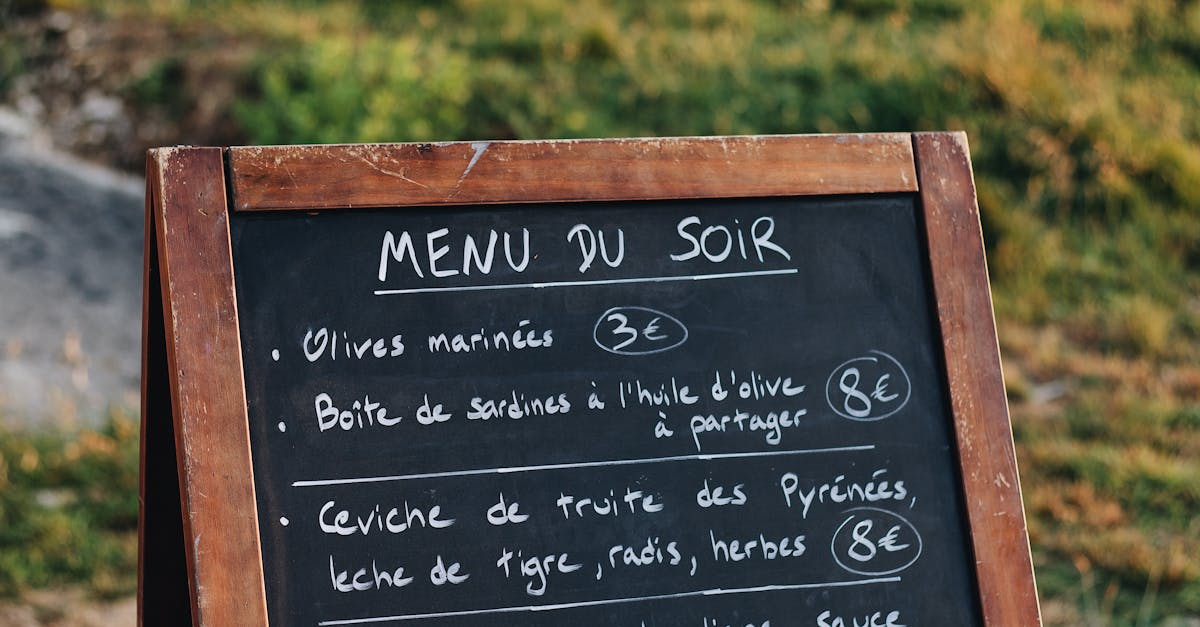
You’ve spent months perfecting your signature dish. The flavors are spot-on, the presentation is beautiful, and your test customers can’t stop raving about it. But now comes the question that keeps restaurant owners up at night: What do you actually charge for it?
Menu pricing is the strategic process of setting prices for your food and beverage items to maximize profitability while maintaining customer value and staying competitive in your market. It’s part art, part science, and entirely crucial to your restaurant’s survival. Get it right, and you build a sustainable business. Get it wrong, and even the best food in town won’t save you from closing your doors.
The stakes have never been higher. As of December 2024, menu prices jumped 0.7% in a single month—the fastest growth since October 2022, according to the National Restaurant Association. Full-service restaurant menu prices increased 4.9% year-over-year, while limited-service prices rose 3.3%. With food costs rising an average of 5% annually and labor costs climbing 3%, your pricing strategy directly determines whether you’re building equity or burning through savings.
This guide walks you through everything you need to know about pricing your menu—from calculating your actual food costs to applying psychological techniques that influence purchasing decisions. You’ll learn the formulas professional restaurateurs use, discover which pricing strategies work for different restaurant types, and understand how to adjust prices without alienating your loyal customers. Whether you’re opening your first food truck or fine-tuning your established restaurant’s profitability, you’ll find actionable strategies you can implement today.
Menu pricing is the strategic process of determining the selling price for each item on a restaurant menu by calculating food costs, labor expenses, and overhead while factoring in desired profit margins, competitive positioning, and customer value perception. It’s not simply adding a markup to your ingredient costs—it’s a comprehensive approach that balances multiple factors to ensure your business remains profitable and competitive.
Effective menu pricing rests on four fundamental pillars:
The basic pricing equation looks straightforward: Menu Price = Total Costs + Desired Profit. But the challenge lies in accurately calculating those costs and understanding what profit margin your market will support. A fine dining establishment in Manhattan operates with different cost structures and customer expectations than a food truck in Austin.
Your prices need regular review and adjustment as costs change. With ingredient prices fluctuating and inflation affecting everything from packaging to utilities, static pricing quickly erodes your margins. Many restaurants delay necessary price updates because reprinting physical menus feels expensive and time-consuming. Digital menus eliminate this barrier entirely—you can adjust prices instantly without reprinting costs, keeping your pricing aligned with your actual costs.
Menu pricing directly determines your restaurant’s profitability, and the margins are thinner than most people realize. The average restaurant operates on profit margins between 3% and 9%. That means for every $100 in sales, you might keep just $3 to $9 after paying for food, labor, rent, and everything else.
Here’s what that means in practical terms: if you’re underpricing your menu by just 5%, you could be eliminating your entire profit margin. On $500,000 in annual revenue, that 5% underpricing costs you $25,000—potentially the difference between profitability and closing your doors.
The current economic environment makes strategic pricing even more critical. McKinsey research shows that despite price increases, diners continue visiting restaurants but are “trading down”—spending the same total amount on fewer items or visiting less frequently. This means your pricing strategy must balance profitability with customer value perception. Price too high, and customers order less or visit competitors. Price too low, and you’re working harder for less money.
Unlike rent, utilities, or supplier costs, your menu prices are one of the few financial levers you actually control. Strategic pricing isn’t about charging the maximum the market will bear—it’s about finding the price points that sustain your business while delivering value your customers appreciate.
Calculating menu prices doesn’t require a finance degree, but it does require accurate information about your costs. Here’s the process professional restaurateurs use to price their menus profitably.
The Quick Formula:
Menu Price = Food Cost ÷ Target Food Cost Percentage
For example, if a dish costs $4.50 to make and you’re targeting a 30% food cost, your menu price would be: $4.50 ÷ 0.30 = $15.00
Let’s break this down step by step:
Let’s work through a real example. Say you’re pricing a chicken parmesan dish:
With a 30% food cost target: $6.50 ÷ 0.30 = $21.67
You might round this to $21.99 or $22.00 depending on your pricing strategy (more on psychological pricing later).
The key to accurate pricing is accurate costing. Weigh your ingredients, account for waste and trim, and update your costs when supplier prices change. A food cost calculator can speed up this process significantly.
Your food cost per item is the foundation of every pricing decision. Get this number wrong, and everything built on top of it crumbles.
The formula: Food Cost Per Item = Sum of (Ingredient Cost × Quantity Used)
For accuracy, you need to:
Example: Costing a Caesar salad
Using a recipe cost calculator can automate this process, especially when managing dozens or hundreds of menu items.
Primary Formula: Menu Price = Food Cost ÷ Target Food Cost Percentage
This is the industry-standard approach. Here’s how it works at different food cost targets:
| Food Cost | Target 25% | Target 30% | Target 35% |
|---|---|---|---|
| $3.00 | $12.00 | $10.00 | $8.57 |
| $5.00 | $20.00 | $16.67 | $14.29 |
| $8.00 | $32.00 | $26.67 | $22.86 |
Alternative: The Markup Multiplier Method
Some operators prefer using a multiplier: Menu Price = Food Cost × Markup Multiplier
Both methods produce identical results—choose whichever feels more intuitive to you.
Food cost percentage is the ratio of your ingredient costs to your menu price, expressed as a percentage. It tells you how much of each dollar in sales goes directly to paying for food. The ideal food cost percentage for most restaurants falls between 28% and 35% of the menu price, though this varies significantly by restaurant type and business model.
Here are industry benchmarks by restaurant type:
| Restaurant Type | Target Food Cost % |
|---|---|
| Fine Dining | 28-32% |
| Casual Dining | 30-35% |
| Fast Casual | 28-32% |
| Fast Food/QSR | 25-30% |
| Cafes | 25-35% |
| Bars (beverages) | 20-25% |
| Food Trucks | 28-32% |
| Ghost Kitchens | 30-35% |
Understanding your food cost percentage helps you identify which items are profitable and which are dragging down your margins. It’s the metric that connects your purchasing decisions to your pricing strategy.
There are two ways to calculate food cost percentage—per item and overall.
Per-Item Food Cost Percentage:
Item Food Cost % = (Food Cost ÷ Menu Price) × 100
Example: Your burger costs $4.25 to make and sells for $14.99
($4.25 ÷ $14.99) × 100 = 28.4% food cost
Overall Food Cost Percentage:
Overall Food Cost % = (Total Food Purchases ÷ Total Food Sales) × 100
Example: Last month you spent $28,000 on food and had $85,000 in food sales
($28,000 ÷ $85,000) × 100 = 32.9% food cost
Track both metrics. Per-item percentages help you price correctly. Overall percentage reveals whether your actual operations match your theoretical pricing—if there’s a significant gap, you might have waste, theft, or portion control issues.
Why do different restaurant types target different food cost percentages? It comes down to their overall cost structures and customer expectations.
Fine dining (28-32%) can accept higher food costs because they achieve high average checks and charge premium prices for the full experience—ambiance, service, and presentation justify prices well above ingredient costs.
Fast food and QSR (25-30%) operate on volume with lower labor costs, so they target lower food costs to maintain profitability at lower price points.
Casual dining (30-35%) falls in the middle—reasonable prices with moderate service expectations. They balance food quality with accessible pricing.
Cafes (25-35%) vary widely because coffee and beverages carry higher margins (often 80%+ gross margin on drinks), which allows more flexibility on food items.
Food trucks (28-32%) operate with lower overhead than brick-and-mortar restaurants but have limited menu space and must price competitively for their locations.
Your target food cost percentage should reflect your specific concept. A farm-to-table restaurant using premium local ingredients might accept 35% food costs because that quality is central to their value proposition. A pizza shop competing on price might need to hit 25% to maintain healthy margins at lower price points.
There’s no single “correct” way to price a menu. The best approach depends on your concept, competition, and customers. Here are seven strategies successful restaurants use, along with when each works best.
What it is: Adding a standard markup to your food cost to determine menu price.
Formula:
Menu Price = Food Cost + (Food Cost × Markup %)
Or:
Menu Price = Food Cost × Markup Multiplier
Example: $5 food cost with 200% markup = $5 + ($5 × 2.00) = $15
Best for: New restaurants establishing baseline pricing, concepts with consistent cost structures, operators who want straightforward calculations.
Pros: Simple to calculate and implement, ensures minimum margin on every item, easy to update when costs change.
Cons: Ignores what customers are willing to pay, doesn’t account for competitive positioning, treats all items the same regardless of popularity.
What it is: Setting prices based on what competitors charge for similar items.
How to research: Visit competitors, check their online menus, review delivery app listings, and note prices for comparable items.
Positioning options:
Best for: Restaurants in competitive markets, concepts similar to established competitors, price-sensitive customer segments.
Caution: Never set prices based solely on competitors without knowing your own costs. Their cost structure differs from yours—matching their prices could mean losing money on every sale.
What it is: Pricing based on perceived customer value rather than cost or competition.
Key insight: Value ≠ cost. A dish might cost $6 to make but deliver $25 worth of perceived value through presentation, ingredients, story, or experience.
Value drivers you can influence:
Best for: Restaurants with unique offerings, concepts built around quality or experience, items with emotional appeal.
Example: A standard chocolate cake costs $3 to make. But “Grandma Rose’s Secret Recipe Chocolate Layer Cake, made fresh daily” might command $12 instead of $9—same cost, higher perceived value.
What it is: Adjusting prices based on demand, time, or other variable factors.
Common applications:
Best for: Restaurants with significant demand variation, concepts that can communicate variable pricing clearly, businesses with digital menu capabilities.
Important consideration: Dynamic pricing requires the ability to change prices quickly. With paper menus, this is impractical. Digital menus make dynamic pricing possible—you can update prices for different dayparts, days, or seasons instantly.
What it is: Using pricing techniques that influence how customers perceive prices and make purchasing decisions.
Key techniques:
This approach is powerful enough that we’ll cover it in detail in the next section.
What it is: Intentionally pricing above market rates to signal exclusivity, quality, or status.
Requirements for success:
Best for: Fine dining, upscale concepts, unique experiential offerings, established restaurants with strong reputations.
Risk: Premium pricing without premium delivery creates disappointed customers who won’t return and will share negative reviews.
What it is: Grouping items together at a combined price that’s lower than purchasing separately.
Bundle types:
Pricing guidance: Bundles typically offer 10-20% savings versus à la carte pricing. The discount encourages the bundle purchase while maintaining profitability because you’re selling more items per transaction.
Best for: Quick service restaurants, family-style concepts, restaurants looking to increase average check, catering operations.
Benefits: Higher average transaction value, simplified ordering decisions, better inventory management when you can predict combo sales.
Menu pricing psychology applies behavioral science principles to influence how customers perceive prices and make purchasing decisions. These techniques are backed by research and used by successful restaurants worldwide. Understanding the psychology behind menu design gives you an edge in optimizing profitability.
The goal isn’t manipulation—it’s presenting your prices in ways that feel fair while guiding customers toward choices that work for both of you.
Charm pricing uses prices ending in 9 or 99 to make items seem less expensive than they are. It works because of the “left-digit effect”—our brains process the first digit before fully reading the rest.
The psychology: When you see $9.99, your brain registers “nine dollars” before processing the ninety-nine cents. The perceived difference between $9.99 and $10.00 feels larger than the actual one-cent gap.
Research shows charm pricing can increase sales by 8-10% compared to round numbers for the same items.
Restaurant application:
When to use round numbers instead: Fine dining and upscale concepts often use clean round numbers ($45, not $44.99) because charm pricing can feel cheap or discount-oriented, which conflicts with premium positioning.
A famous Cornell University study found that customers spent 8% more when menus displayed prices without dollar signs. The absence of the currency symbol reduces the “pain of paying” by making prices feel less like money and more like abstract numbers.
How to implement:
Caveat: This technique works best in contexts where the setting is clearly transactional (customers know they’re paying). For takeout menus or online ordering where clarity matters, including clear pricing notation may reduce confusion.
Anchoring exploits a cognitive bias where the first price we see becomes a reference point for all subsequent prices. A $45 steak makes a $28 chicken dish feel reasonable, even if $28 is objectively expensive for chicken.
Menu application:
Example: Wine list shows a $200 bottle first. Suddenly the $60 bottle looks approachable, and the $45 bottle feels like a bargain—even though customers might have balked at $45 without the anchor.
The decoy effect adds a third option that makes one of the other options more attractive. You’re not really trying to sell the decoy—you’re using it to steer choices.
Classic example:
The medium at $5.50 makes the large at $6.00 seem like a great deal—only 50 cents more for significantly more product. Most customers choose the large.
Restaurant applications:
Menu engineering is the strategic analysis and design of a menu to maximize profitability. It combines pricing strategy with menu layout principles to ensure your most profitable items get the attention they deserve.
The foundation of menu engineering is the menu matrix, which categorizes every item by two factors: profitability and popularity.
Plot each menu item based on its contribution margin (profitability) and sales volume (popularity):
Stars (High Profit, High Popularity)
Plowhorses (Low Profit, High Popularity)
Puzzles (High Profit, Low Popularity)
Dogs (Low Profit, Low Popularity)
For a deeper understanding of how to analyze your menu performance, review the principles of menu analysis.
Eye-tracking research reveals that customers don’t read menus like books. They scan in predictable patterns, and certain areas get more attention than others.
The “Golden Triangle”: For two-panel menus, eyes typically start at the middle, move to the top right, then top left. For single-page menus, the top right corner gets the most attention.
Application strategies:
With digital menus, you can test different arrangements and track which placements drive sales. Traditional paper menus require expensive reprints to test layouts—an online menu lets you reorganize instantly and measure results.
Research shows that descriptive menu labels increase sales by up to 27% compared to simple item names. Strong menu descriptions justify prices by communicating value.
Techniques that work:
Before: “Grilled Salmon – $24”
After: “Wild-Caught Pacific Salmon, cedar-planked and finished with citrus herb butter, served with seasonal vegetables – $24”
Both describe the same dish at the same price, but the second version communicates why it’s worth $24.
Pricing isn’t a one-time decision—it requires ongoing attention as your costs, competition, and market change. The USDA projects food-away-from-home prices will increase 3.3% in 2026, continuing the pressure on restaurant margins.
Review frequency: Most successful restaurants review prices quarterly and adjust 2-4 times per year. If you haven’t adjusted prices in 12+ months, you’re almost certainly leaving money on the table—or worse, losing money on certain items.
Watch for these indicators that price increases are necessary:
Regional differences matter too. According to the National Restaurant Association, menu prices rose most in the West (4.3%), followed by the Northeast (3.8%), Midwest (3.6%), and South (3.5%). Your pricing strategy should reflect your local market conditions.
Price increases don’t have to drive customers away. Research shows customers rarely notice increases under 5%, but often react negatively to increases over 10%.
Strategies for successful price increases:
The biggest barrier to timely price increases? The cost and hassle of reprinting menus. Many restaurant owners delay necessary adjustments because they just ordered new menus or don’t want to spend hundreds on reprints. By the time they finally update, margins have eroded for months.
Digital menus eliminate this barrier completely. When your tomato supplier raises prices, you can adjust your menu prices the same day—no reprinting, no waiting, no cost. This responsiveness keeps your margins healthy instead of letting cost increases eat into profits for weeks or months.
The right tools make menu pricing faster and more accurate. Here’s what’s available across different budget levels.
Free options:
Recipe costing software ($50-300/month):
POS systems with menu management:
If you’re starting with limited budget, a spreadsheet approach works well:
Limitations: Spreadsheets require manual updates, can become unwieldy with large menus, and don’t help with the implementation side—you still need to update your actual menus.
Here’s a reality most restaurant owners know too well: traditional paper menus create a pricing barrier. Every change costs $200-500 or more to reprint. So you delay necessary price increases, accepting margin erosion because the reprint feels too expensive or disruptive.
By the time you finally update, you’ve lost months of potential profit. And within weeks of reprinting, costs change again.
Menubly and similar digital menu platforms solve this problem entirely:
The math makes sense: if delayed price increases cost you even $500/month in margin erosion, a digital menu platform pays for itself many times over while giving you the flexibility to keep pricing aligned with costs.
Try Menubly free for 30 days—update your prices as often as you need, no credit card required.
While core pricing principles apply universally, different food business types have unique considerations. Understanding the different types of restaurants helps clarify why pricing strategies vary.
Cafes benefit from the high margins on beverages—coffee drinks typically achieve 80-85% gross margins, significantly higher than food items.
Key strategies:
Digital menus work especially well for cafes because of the customization complexity—size options, milk choices, and add-ons are easy to display and update.
Bakeries face unique challenges: daily production schedules, spoilage concerns, and the mix of standard items versus custom orders.
Key strategies:
The ability to mark items sold out instantly matters for bakeries—when the morning croissants sell out, customers need to see that immediately rather than walking in disappointed.
Food trucks operate with lower overhead but face unique constraints: limited menu space, speed requirements, and location variability.
Key strategies:
Food trucks benefit enormously from digital menus—no physical menus to carry, damage, or reprint. A QR code displayed on the truck window gives customers instant access to the full menu.
Catering pricing differs significantly from restaurant pricing because of labor intensity, planning requirements, and order size variability.
Pricing models:
Key considerations:
A simple restaurant website helps catering businesses showcase packages and make contact information easily accessible to potential clients.
Even experienced restaurant operators make pricing errors. Here are the most damaging mistakes and how to fix them.
1. Underpricing out of fear
Many owners worry that any price increase will drive customers away. The result? Prices that don’t cover costs. Remember: customers who only come because you’re cheap aren’t loyal—they’ll leave when they find somewhere cheaper.
Fix: Price for profitability, then deliver value that justifies the price.
2. Copying competitor prices blindly
Your costs aren’t their costs. Matching a competitor’s $14 burger price makes no sense if your food cost is $5.50 and theirs is $4.00.
Fix: Know your costs first, then use competitive pricing as one input among many.
3. Infrequent price updates
This is perhaps the most costly mistake. Restaurants delay necessary price increases because reprinting menus feels expensive or inconvenient. Meanwhile, margin erosion compounds month after month.
Fix: Use digital menus that allow instant, cost-free updates. Review prices quarterly at minimum.
4. Ignoring food cost percentage
Pricing by gut feel or round numbers without calculating actual food costs leads to unpredictable margins. You might be losing money on your most popular item.
Fix: Calculate food cost percentage for every item. Target appropriate percentages by category.
5. Same markup across all items
A blanket 3x markup treats a $2 appetizer the same as an $8 entrée. This ignores market expectations and profit potential.
Fix: Use different margins for different categories. Beverages can carry higher margins than entrées.
6. Neglecting psychological pricing
Presenting prices without any consideration for how customers perceive them leaves money on the table.
Fix: Apply appropriate psychological techniques—charm pricing, anchoring, or clean numbers depending on your concept.
7. Not testing prices
Setting prices once and never experimenting means you’ll never find optimal price points.
Fix: Test different prices on select items and measure results. Digital menus make this easy and reversible.
8. Poor menu design undermining prices
Even correct prices fail if your menu design draws attention to prices instead of food, or if high-margin items are buried in hard-to-find locations.
Fix: Apply menu engineering principles—position profitable items prominently, use descriptions to justify prices.
A good food cost percentage typically falls between 28% and 35% for most restaurants. Fine dining often targets 28-32%, casual dining 30-35%, and fast food 25-30%. Your ideal percentage depends on your concept, overhead costs, and pricing power in your market.
Calculate menu prices by dividing your food cost by your target food cost percentage. For example, if a dish costs $5 to make and you want a 30% food cost, divide $5 by 0.30 to get a menu price of $16.67. Then adjust for market positioning and psychological pricing.
Restaurants should review prices quarterly and typically adjust 2-4 times per year. Any time food costs change significantly (more than 5-10%), you should consider adjusting prices promptly. Digital menus make frequent adjustments practical by eliminating reprint costs.
Research suggests removing dollar signs can increase spending by about 8% because it reduces the “pain of paying.” However, this works best in certain contexts—fine dining and sit-down restaurants. For takeout menus or online ordering where clarity matters, including dollar signs may be more appropriate.
The average markup on restaurant food is approximately 300% (3x the food cost), though this varies significantly by item type and restaurant concept. Beverages typically carry higher markups (400-500%), while proteins may be lower (250-300%). The actual markup depends on your target food cost percentage.
Price a new menu item by first calculating the complete food cost, then applying your target food cost percentage formula. Compare the calculated price to similar items on your menu and competitor offerings. Consider the item’s perceived value—unique or premium items may support higher prices than the formula suggests.
Charm pricing ($9.99 vs $10) typically increases sales for value-oriented concepts by making prices seem lower. However, round numbers work better for premium positioning where $45 signals quality more effectively than $44.99. Match your pricing style to your brand positioning.
Portion sizes are determined by balancing food cost targets, competitive expectations, and customer satisfaction. Start with your target food cost percentage to determine how much food you can serve at a given price point, then adjust based on market research and customer feedback.
Menu engineering is the strategic analysis and design of a menu to maximize profitability. It categorizes items into Stars (high profit, high popularity), Plowhorses (low profit, high popularity), Puzzles (high profit, low popularity), and Dogs (low profit, low popularity), then applies strategies to optimize each category’s performance.
Many restaurants price delivery items 10-20% higher to offset packaging costs and delivery logistics. If using third-party delivery apps that charge 15-30% commission, you may need to increase prices further to maintain margins. Alternatively, offer commission-free direct ordering through your own digital menu to keep prices consistent.
Menu pricing combines math, psychology, and market awareness. Master these principles and you control one of the most powerful levers affecting your restaurant’s profitability.
Key principles to remember:
Your action checklist:
Pricing is a skill that improves with practice. Your first attempt won’t be perfect—that’s okay. The restaurants that succeed are the ones that continuously refine their approach based on data and results.
Ready to put your pricing strategy into action? Create your digital menu with Menubly and update prices instantly—no reprinting, no delay, no extra cost. Start your free 30-day trial today.
Have questions about your specific pricing situation? Contact our team at support@menubly.com or see our pricing plans.