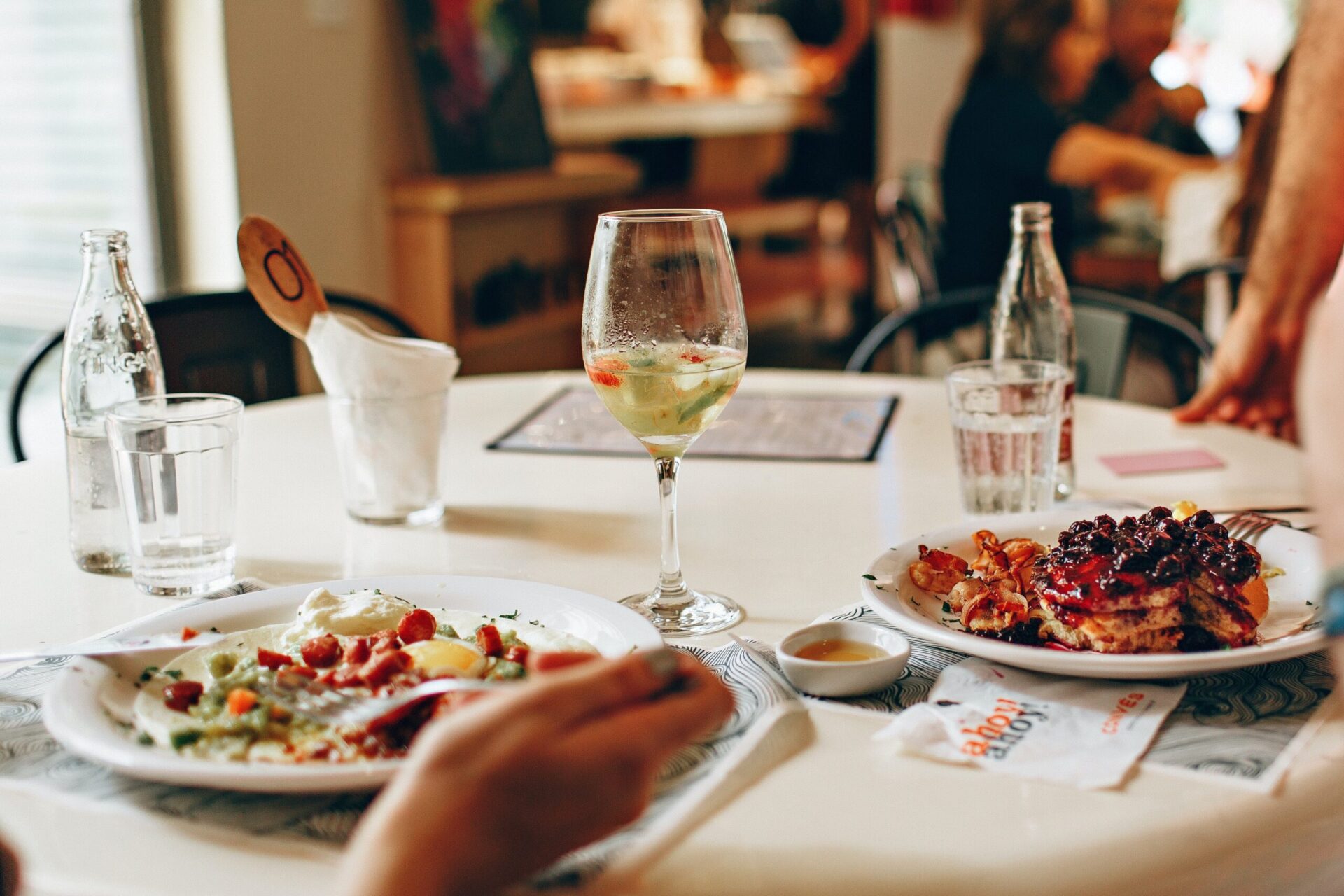
The prix fixe concept has been filling restaurant seats for over 200 years — from 19th-century Parisian dining rooms to modern Restaurant Week programs in cities worldwide. And it’s not just for fine dining. Today, many restaurants use fixed-price menus to control food costs, speed up kitchen operations, and give guests a curated dining experience at a predictable price.
For restaurant owners, a well-designed prix fixe menu is one of the most effective ways to boost your profit margin while offering guests a complete meal they’ll remember. But getting it right takes more than listing three courses and picking a price. Your dishes need to work together, your pricing has to cover the most expensive combination on the menu, and the whole thing needs to be easy to update as seasons change.
This ultimate guide for restaurant owners covers everything you need to know about the prix fixe menu — what it means, how it works, how it compares to a la carte and table d’hote formats, the real advantages and disadvantages, a step-by-step pricing formula, the best occasions to offer one, and how to create a prix fixe menu that works for your restaurant.
A prix fixe menu is a set menu that offers a multi-course meal at a fixed price, where guests choose from a limited selection of dishes for each course and pay the same amount regardless of what they pick. The term “prix fixe” comes from French and literally means “fixed price”.
Prix fixe is pronounced “pree-feeks” (or “pree-fiks” in American English). You might see it spelled “prefix” or “pre-fixed” on some menus, but the correct spelling is always prix fixe.
A standard prix fixe meal typically includes three courses — an appetizer (or hors d’oeuvre), a main course (entrée), and a dessert. Some restaurants expand this to four or five courses by adding a soup or salad, a cheese course, or a palate cleanser between dishes. The key feature is that the set price stays the same no matter which options a guest selects within each course. A prix fixe menu allows restaurants to plan purchasing, prep, and staffing around a defined set of dishes rather than guessing what guests will order.
The format dates back to 19th-century France, where taverns and inns served set meals to large groups because taking individual orders wasn’t practical. French chef Auguste Escoffier later refined the concept in the late 1800s while running the kitchen at the Grand Hotel in Monte Carlo, developing the prix fixe menu alongside the a la carte menu that defines French cuisine to this day.
Today, prix fixe menus appear across every type of menu format — from upscale restaurants to casual neighborhood bistros. Even fast-food restaurant combo meals are, in their simplest form, a version of the fixed-price concept: a predetermined meal at a set price.
These three menu formats are often confused, and some restaurants use the terms interchangeably. Here’s how they actually differ.
An a la carte menu lists every dish separately with its own price. Guests pick exactly what they want and pay for each item individually. This gives diners the most flexibility but often results in a higher total bill since each food item carries its own markup.
A prix fixe menu offers a complete multi-course meal at one fixed price. Guests typically choose from two to four options for each course, and the price remains the same regardless of their selections. The chef designs the courses to work together as a progression of flavors.
A table d’hote menu — French for “the host’s table” — is similar to prix fixe but traditionally offers even fewer choices per course. It’s commonly used at banquets, hotel restaurants, cruise lines, and catered events where the host has predetermined the menu for the group.
The line between prix fixe and table d’hote has blurred over time, and many restaurants now treat them as the same thing. A tasting menu is another related format — it typically features more courses (5-12+) with smaller portions and no choices, showcasing the chef’s signature dishes in a specific sequence.
| Feature | Prix Fixe | A La Carte | Table d’Hote | Tasting Menu |
|---|---|---|---|---|
| Pricing | One fixed price for the entire meal | Each dish priced individually | One fixed price for the entire meal | One fixed price (often higher) |
| Course choices | 2-4 options per course | Full menu available | 1-2 options per course | No choices (chef selects all) |
| Number of courses | 3-5 courses | Guest decides | 3-5 courses | 5-12+ courses (smaller portions) |
| Best for | Special occasions, holidays, restaurant week | Everyday dining | Banquets, events, group dining | Fine dining, chef-driven experiences |
| Cost to diner | Predictable, often good value | Varies, often higher total | Predictable, often economical | Premium pricing |
Here’s how a prix fixe menu typically works, from the guest’s perspective and behind the scenes in the kitchen:
Not every prix fixe menu follows the same format. The type you choose depends on your restaurant’s style, your kitchen’s capabilities, and the occasion you’re designing the menu for. A prix fixe menu might be a simple three-course dinner or a twelve-course tasting experience — here are the most common options that restaurants use.
The most traditional format: an appetizer, a main course, and a dessert — all offered at a fixed price. This is the standard prix fixe structure used by many restaurants for holidays, special events, and regular dinner service. It’s straightforward for both your kitchen staff and your guests. Best for: restaurants of any type that want a simple, proven format.
A prix fixe tasting menu features five to twelve or more courses of smaller portions, each selected by the chef with no substitutions. This format is designed to showcase the chef’s creativity and culinary technique, and often includes wine pairing options for each course. Best for: fine dining establishments and restaurants that want to highlight their cuisine.
This seasonal menu changes every few weeks based on what ingredients are available locally. A spring menu might feature asparagus and lamb, while a fall menu could center around squash, polenta, and braised meats. Rotating the menu with seasonal ingredients keeps regulars coming back and helps control food costs. Best for: farm-to-table restaurants and any establishment focused on fresh, local cuisine.
This format offers two or three pricing tiers — for example, a two-course lunch for $30 and a three-course dinner for $50, or a standard meal and a premium version that includes a wine pairing or upgraded main dish. Tiered prix fixe options give guests the flexibility to choose a price point that fits their budget. Best for: restaurants that want to attract a broader range of customers.
A limited-time menu created specifically for restaurant promotions like Restaurant Week, food festivals, or community events. These menus typically offer a lower price point than the regular menu to draw in customers who might not otherwise visit. It’s one of the best ways for a new menu concept to get attention and bring first-time guests through your door. Best for: restaurants looking to attract new customers and build awareness.
| Type | Courses | Price Range | Best For |
|---|---|---|---|
| Classic Three-Course | 3 | $30-$80 | Holidays, special occasions |
| Chef’s Tasting | 5-12+ | $75-$300+ | Fine dining experiences |
| Seasonal | 3-5 | $35-$90 | Farm-to-table, local cuisine |
| Tiered | 2-5 (varies) | $25-$100+ | Broad audience appeal |
| Restaurant Week | 2-3 | $20-$45 | New customer acquisition |
A well-executed prix fixe menu offers real financial and operational benefits for restaurants and guests alike. Here’s what it can do for your restaurant.
With a limited number of dishes to prepare, you know exactly what ingredients to buy and in what quantities. This makes it much easier to calculate food cost percentage and keep your spending within target. When your food cost is predictable, your profit margin is too.
A regular a la carte menu with dozens of items leads to spoilage because you’re stocking ingredients for dishes that may not sell. A prix fixe menu relies on a smaller selection of ingredients, which means less food waste and lower costs. You buy what you need and use what you buy.
Guests on a prix fixe menu order a complete meal — appetizer, main, and dessert — plus optional add-ons like wine pairing or a cheese course. This typically results in a higher check size than a la carte ordering, where many diners skip courses. A prix fixe menu can help increase restaurant sales without adding many menu items to your lineup.
When your kitchen team knows exactly which dishes are on the menu, they can prep ingredients in larger batches and work faster. Fewer menu items means fewer unique preparations, which translates to shorter ticket times and more consistent quality. This is especially valuable during busy holidays when demand is high.
Focusing on fewer dishes allows your chefs to refine each one. Instead of spreading attention across 30+ items, the kitchen can dedicate time to getting five or six dishes exactly right. The result is a more consistent, higher-quality meal that helps enhance the dining experience for your customers.
A limited-time prix fixe menu creates urgency — guests know the menu won’t last forever, which motivates them to book a reservation. Seasonal prix fixe menus, holiday specials, and Restaurant Week offerings all generate buzz and give you a natural way to promote your restaurant on social media and email.
When every guest pays the same price for their meal, forecasting your nightly revenue becomes simple math: multiply your set price by the number of covers. This helps with staffing decisions, ordering, and overall planning. Knowing your revenue per guest in advance gives you more control over your restaurant’s finances and helps you track sales and inventory reports more accurately.
No menu format is without trade-offs. Here are the real disadvantages to consider before implementing a prix fixe menu at your restaurant.
Some diners prefer the freedom of a la carte ordering. With only two to four options per course, guests who are picky eaters or simply want something specific may feel restricted. You can reduce this issue by offering a prix fixe menu alongside your regular menu so guests have both options.
Guests with food allergies, vegan diets, or other dietary needs can find a fixed menu restrictive. If your three appetizer options all contain dairy, for example, a lactose-intolerant guest has no suitable choice. The solution is to plan at least one allergen-friendly option per course or offer a separate prix fixe menu for guests with dietary restrictions.
When you lock in a fixed price, you’re betting that your ingredient costs will stay stable. If the price of a key ingredient spikes unexpectedly — say, seafood prices jump 40% after a supply disruption — your margin shrinks while your published menu prices stay the same. Regular menu reviews and flexible dish selections help manage this risk.
Not every guest will finish every course. Some diners may eat the main and dessert but barely touch the appetizer, which means food waste if not all courses are consumed. Portion control and thoughtful course design can reduce this — think lighter starters and more substantial mains.
Careful planning and restaurant design of the menu is essential — a prix fixe menu demands more upfront effort and inventory management than a standard la carte menu. You need to calculate food costs per guest, balance high-cost and low-cost dishes across courses, train staff on the new menu, and plan for dietary requests — all before service begins. The payoff is consistency and profitability, but it does take effort to get right.
Now that you understand what a prix fixe menu is and the trade-offs involved, let’s get into the practical side — how to price it, when to offer it, and how to create a prix fixe menu for your restaurant.
Many restaurants worldwide offer prix fixe menus, ranging from casual cafes to fine-dining establishments. Here are a few examples of prix fixe menus you might find at different types of restaurants:
These are just a few examples of the many different types of menu you might encounter at restaurants worldwide. Each menu is uniquely crafted to showcase the restaurant’s culinary style and expertise.
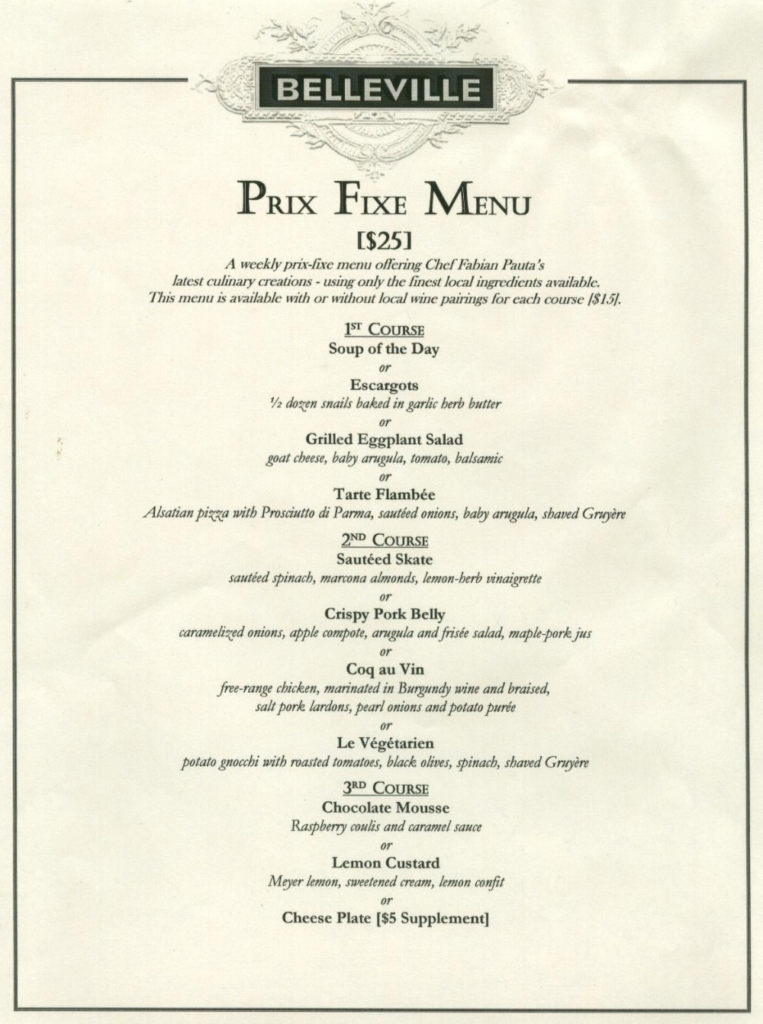
Menu pricing for a prix fixe menu follows the same basic principles as regular menu pricing, but with one important difference: you need to price based on the most expensive combination of dishes a guest could order.
Add up the ingredient cost for every dish on your prix fixe menu. Then identify the most expensive possible combination — the priciest appetizer plus the priciest main course plus the priciest dessert. Use this number as your food cost per guest.
For example, if your most expensive combination is a $6 appetizer + $16 entrée + $5 dessert, your food cost per guest is $27.
Most restaurants aim for a food cost between 25% and 35% of the menu price. The formula is:
Prix fixe price = Food cost per guest ÷ Target food cost percentage
Using the example above: $27 ÷ 0.30 (30% food cost target) = $90 prix fixe price.
If a guest orders a less expensive combination — say, $4 appetizer + $12 main + $4 dessert ($20 total food cost) — your actual food cost drops to 22%, which only increases your margin. This is why pricing based on the most expensive combination protects your profitability no matter what guests choose.
Offering multiple tiers can appeal to a wider audience. For example, a two-course lunch for $35 and a three-course dinner for $65, or a standard prix fixe and a premium version that includes wine pairing at a higher price. This makes the base price feel like a solid value while giving some guests a reason to spend more.
Prix fixe menu prices vary widely depending on the restaurant, location, and number of courses:
For fine dining, use round numbers ($90, $120) since menu prices ending in “.99” can undermine the premium feel. For casual restaurants, $X.95 or $X.99 pricing is common and expected.
You don’t have to commit to a fixed menu full-time. Many restaurants use it strategically for specific occasions. Here are the best times to offer a prix fixe menu.
Valentine’s Day, New Year’s Eve, Thanksgiving, Mother’s Day, and Christmas are the busiest dining nights of the year. A prix fixe menu simplifies kitchen operations during these high-volume nights, allowing faster service and more predictable staffing. Most fine dining restaurants switch to prix fixe-only on major holidays because it’s the most efficient way to serve a full house.
Restaurant Week programs give you a chance to attract customers to try your restaurant at a lower price point. A specially priced prix fixe menu — say, $30 for three courses — lets new guests sample your cuisine without the commitment of a full-price dinner. It’s an effective way to promote your restaurant to people who might otherwise think it’s out of their budget.
Changing your prix fixe menu every three to four weeks based on seasonal ingredients keeps your offerings fresh and gives regulars a reason to return. A summer menu featuring fresh seafood and stone fruit works differently than a winter menu highlighting braised meats and root vegetables. This approach also helps control costs since in-season ingredients are typically cheaper.
If your restaurant has quiet Tuesday or Wednesday nights, a weeknight-only prix fixe menu can drive traffic. Offering a discounted meal at a set price (say, $35 for three courses on a Monday) gives budget-conscious diners a reason to choose your restaurant over staying home. It fills seats that would otherwise sit empty.
Some restaurants — especially fine dining and farm-to-table establishments — run prix fixe menus as their primary format all year. If your restaurant’s identity centers on a chef-driven experience, a permanent prix fixe or tasting menu might be a better fit than a la carte. Many restaurants also offer a prix fixe menu alongside their regular a la carte menu, giving guests the option to choose whichever format suits them.
Ready to create a prix fixe menu for your restaurant? Follow these seven steps to build one that works for both your kitchen and your guests.
Start with a clear theme that ties your courses together. This could be a cuisine (French, Italian, Japanese), a season (spring harvest, winter comfort), a special occasion (Valentine’s Day dinner, anniversary), or even a specific ingredient that appears across multiple courses. A theme gives your menu a story and encourages guests to explore flavors and textures they might not order on their own.
Decide how many courses to include — three is the standard for a full-course dinner, but four or five works for higher-end menus. For each course, pick two to four options that balance variety with kitchen practicality. Mix simple dishes with one or two that demand more prep time. Every dish should pair well with the others, creating a progression of flavors from the first course through dessert. Include at least one lighter option per course (like a salad or broth-based soup) alongside richer items. Selecting the right combination of dishes is where menu engineering makes the biggest difference.
Use the pricing formula from the section above: find your highest food cost combination, divide by your target COGS percentage (25-35%), and set your price accordingly. Cross-check against local competitors to make sure your price feels fair. If your food cost per guest for the most expensive combination is $24 and you want a 30% food cost, price your menu at $80.
Plan for guests with food allergies and dietary restrictions from the start. Include at least one vegetarian or vegan option per course, and clearly label allergens on the menu. Some restaurants handle this by creating a separate prix fixe menu for vegetarian or allergen-free diners. Addressing dietary needs upfront prevents awkward kitchen modifications during service and helps ensure your restaurant serves everyone at the table.
A prix fixe menu changes more frequently than a regular menu — seasonal rotations, holiday specials, and Restaurant Week promotions all mean a new menu every few weeks. Printing physical menus each time gets expensive fast. A digital menu eliminates that cost entirely. With a platform like Menubly, you can update your prix fixe offerings instantly — add new dishes, change prices, swap courses — and the changes appear on your online menu right away. You can organize courses into clear categories, add dish photos and descriptions, and share the menu through a link or QR code menu that guests scan at the table. All for $9.99/month with no reprinting costs.
Your restaurant staff needs to know the menu inside and out. They should be able to explain each dish, describe flavors, suggest wine pairing options, and handle dietary questions confidently. Brief your team before every new prix fixe menu launch. Help your staff practice recommending the menu and answering common guest questions — this directly impacts how many prix fixe meals you sell each night.
Announce your new menu on social media, email, and your website at least a week before launch. Use photos of the actual dishes, mention the price clearly, and specify dates if it’s a limited-time offer. A prix fixe menu is a natural marketing hook — “Three courses for $55” is a clear, specific message that gives potential guests a reason to book a reservation.
Keep these practical tips in mind when designing your menu:
Prix fixe is pronounced “pree-feeks” in French or “pree-fiks” in American English. The “x” at the end of both words is silent. You may see it informally spelled as “pre-fix” or “prefix,” but the correct spelling is prix fixe.
Usually not. Most prix fixe menus cover food courses only, with beverages priced separately. Some restaurants offer an optional wine pairing or beverage package as an add-on. If drinks are included, the menu will typically state this clearly.
This varies by restaurant. Some establishments include a service charge (usually 18-20%) in the prix fixe price, especially for large groups. Others leave gratuity up to the guest. Check the menu or ask your server — if a gratuity is included, it will usually be noted at the bottom of the menu.
Not at all. While prix fixe menus are common in fine dining, they’re used by restaurants of all types — casual bistros, neighborhood restaurants, cafes, and even fast-food restaurants (think combo meals). Restaurant Week programs across many cities feature prix fixe menus at every price point, from $20 to $200+. A prix fixe menu could work for almost any type of restaurant.
The standard is three courses: appetizer, main course, and dessert. But prix fixe menus can range from two courses (common for lunch) to twelve or more (for tasting menus). Most restaurants offer three to five courses for a dinner prix fixe menu.
It depends on your restaurant type and location. Casual restaurants typically price prix fixe menus at $25-$45, mid-range restaurants at $45-$80, and fine dining at $80-$150+. The key is to price based on your food cost per guest — aim for a 25-35% food cost ratio using the most expensive dish combination on your menu.
Minor modifications (like removing an ingredient) are usually possible. Major substitutions are less common since the menu is designed as a set experience. However, most restaurants will accommodate serious dietary needs or allergies. Let your staff know which modifications are acceptable and which aren’t.
Every 3-4 weeks is a good rhythm for seasonal rotations. Holiday and event-specific menus change with the occasion. If you run a permanent prix fixe, consider refreshing at least quarterly to keep things interesting and give regulars a reason to return. Creating a restaurant menu that stays fresh requires ongoing planning, but digital tools make the actual updates fast and free.
A prix fixe menu is an excellent way for restaurant owners to control food costs, optimize kitchen operations, and give guests a complete meal they’ll remember. Whether you use it for a special holiday dinner, a seasonal rotation, or a permanent offering, a prix fixe menu allows restaurants and guests alike to enjoy a structured, satisfying dining experience at a predictable price.
The restaurants that succeed with prix fixe are the ones that plan their pricing carefully, refresh their menus regularly, and present them professionally — whether on paper, on screen, or both.
Menubly makes it easy to build, update, and share your prix fixe menu digitally — with instant updates, organized course categories, branded design, and QR code sharing, all for $9.99/month. Try Menubly free for 30 days, no credit card required.