
The table d’hôte menu has been around for more than 400 years — the term first appeared in English around 1617, borrowed from the French phrase meaning “the host’s table.” Today, this fixed-price, multi-course menu format remains one of the most effective ways for restaurants to control food costs, speed up service, and deliver a memorable dining experience — all at a predictable price for the guest.
Whether you run a fine dining restaurant, manage banquet events, or want to add a new dining option to your café, understanding the table d’hôte format gives you a practical tool for increasing profitability while keeping operations simple.
This guide covers everything you need to know about the table d’hôte menu: what it means, its history, how it compares to à la carte and prix fixe formats, the key advantages and disadvantages, how to price one correctly, and a step-by-step process for creating your own.
A table d’hôte menu is a type of menu designed to offer a multi-course meal at a fixed total price, with a limited selection of dishes for each course. This type of menu allows guests to pay one predetermined price for the entire meal, regardless of which options they choose within each course.
Pronunciation: Table d’hôte is pronounced “tah-bluh doht.” The phrase comes from French and literally translates to “the host’s table.”
A typical table d’hôte menu typically includes multiple courses — three to five — such as an appetizer or soup, a main course (entrée), and a dessert, with two to four options per course. The chef designs the menu so each course pairs with the others, creating a balanced, cohesive meal. Some restaurants also include a glass of house wine or coffee with the set price.
This format differs from an à la carte menu, where every dish is listed and priced separately. With table d’hôte, you’re paying for the full dining experience rather than building a meal item by item.
| Feature | Table d’Hôte | À la Carte |
|---|---|---|
| Pricing | One fixed price for the full meal | Each dish priced separately |
| Choices | 2–4 options per course | Full menu of individual dishes |
| Preparation | Often prepared in advance, in batches | Cooked fresh to order |
| Best For | Events, fine dining, set occasions | Casual dining, flexible ordering |
The table d’hôte concept started in 17th-century French inns and guesthouses. Travelers would sit together at a common table — the host’s table — and eat whatever meal the innkeeper had prepared that day. There was no menu to choose from. Everyone ate the same food at the same time for the same price.
The term was first documented in English as early as 1617. By the late 1600s, similar communal meals were being served in French cabarets and traiteurs (early food sellers). The format became the most common way of dining in public in Paris before the modern restaurant emerged.
After the French Revolution in the late 1700s, chefs displaced from aristocratic households opened public eateries offering structured, affordable meals. By 1814, over 3,000 restaurants operated in Paris, and many used fixed-price table d’hôte menus. The format spread to England through coaching inns and to the United States through immigration and tourism in the 19th century.
Today, the table d’hôte tradition lives on across the world in different forms. In Spain, the “menú del día” offers a starter, main, bread, drink, and dessert for €8–€30. In India, the thali serves a full meal of multiple dishes on a single platter at a set price. In Sweden, nearly every restaurant serves a “Dagens rätt” (daily dish) during lunch at a lower fixed price. And in Japan, the teishoku is a set meal combining rice, soup, a main, and sides.
These three menu formats are often confused, and some restaurants use the terms interchangeably. But there are real differences between à la carte and table d’hôte — and between both of those and prix fixe — that matter when you’re deciding which format fits your operation.
Table d’hôte offers a multi-course meal at a single fixed price. Guests choose from a limited selection of dishes within each course (typically 2–4 options per course). The focus is on a chef-curated experience with a structured meal progression.
À la carte means “according to the menu.” Every dish is listed individually with its own price. Guests build their own meal by selecting whatever they want — one dish or five. This gives maximum flexibility but makes costs less predictable for both the restaurant and the diner.
Prix fixe (meaning “fixed price”) is the closest format to table d’hôte. Both offer a multi-course meal at a set price. The main difference: prix fixe menus often have less choice per course — sometimes no choice at all, with a single set sequence of dishes. Table d’hôte typically gives guests options within each course.
| Feature | Table d’Hôte | À la Carte | Prix Fixe |
|---|---|---|---|
| Pricing | One fixed price for all courses | Each dish priced individually | One fixed price for all courses |
| Choices per Course | 2–4 options | Full menu selection | Little to no choice |
| Number of Courses | 3–5 courses (sometimes more) | Diner decides | 3–7 courses (set sequence) |
| Preparation Style | Batch preparation common | Cooked fresh to order | Cooked fresh, often per seating |
| Service Speed | Fast — courses are pre-planned | Slower — each order is unique | Moderate — set sequence, fresh prep |
| Best For | Events, banquets, hotel dining | Casual dining, everyday service | Fine dining, chef’s tasting menus |
| Flexibility | Moderate — limited but present | High — full customization | Low — set menu only |
Many restaurants offer both table d’hôte and à la carte options side by side — the usage varies by region and dining style. In the UK, for example, restaurants often use a table d’hôte as a lower-priced alternative during quieter hours to attract weekday diners, while keeping the full à la carte menu available at all times.
Every table d’hôte menu shares a set of defining features that separate it from other menu formats. Here are the characteristics that make this format work:
The table d’hôte format offers clear benefits for restaurant operations, finances, and the guest experience. Here’s why many food businesses choose this format.
With a limited number of dishes to prepare, your kitchen runs more smoothly. A table d’hôte menu helps streamline everything from prep to plating — chefs can focus on executing a smaller menu at a higher quality level instead of juggling dozens of different orders. Prep lists are shorter, cooking times are more predictable, and service becomes faster.
A set menu lets you calculate your exact food cost per meal before a single guest walks in. You know precisely what ingredients you need, how much to buy, and what your margins will be. Most restaurants aim for a food cost percentage between 28% and 35%, and the table d’hôte format makes hitting that target much easier than managing a large à la carte menu.
When you know exactly how many options you’re serving and can predict ordering patterns, you buy only what you need. Limited menu items mean fewer ingredients sitting unused in storage. This cuts waste significantly compared to a broad à la carte menu where less popular dishes often lead to spoiled inventory.
Guests spend less time deciding from a long menu, and the kitchen delivers courses faster with pre-planned preparation. This means shorter meal times and higher table turnover during busy periods — directly increasing revenue per seat per hour.
A fixed-price multi-course meal often results in a higher average check than what guests would spend ordering individual dishes. The perceived value of getting a full three-course meal at one price encourages guests to dine more fully than they might if ordering each item separately. According to industry research, well-priced set menus can boost per-guest spending by 20–30% compared to typical à la carte orders.
Your front-of-house team needs to know fewer dishes, which means faster training and more confident recommendations. Servers can describe three to four options per course with genuine knowledge, rather than memorizing an entire à la carte menu. This leads to better service and stronger upselling on wine or drink pairings.
Table d’hôte menus are designed as a complete culinary experience, not a random collection of dishes. The chef thoughtfully controls the flavor progression, portion balance, and overall meal flow. For guests, this means a curated meal that feels planned and polished — which builds loyalty and positive reviews.
No menu format is perfect for every situation. Here are the real challenges of running a table d’hôte menu and how to address them.
Some diners want full control over their meal. With only two to four options per course, guests who prefer variety may feel restricted. This is especially true for adventurous eaters or groups with very different taste preferences. Offering a small à la carte section alongside the table d’hôte can solve this.
A limited menu makes it harder to accommodate allergies, vegetarian, vegan, or gluten-free diets. If one of your three main course options contains a common allergen, a guest with that allergy effectively has only two choices. Planning at least one accommodating option per course — or noting substitution availability — helps address this.
Your fixed menu price stays the same, but ingredient costs can change weekly. If the price of a key ingredient spikes — salmon jumps 40% during a supply shortage, for example — your margins shrink unless you adjust the menu. Regular pricing reviews and building in a small buffer help protect against this.
A single price for a multi-course meal can potentially look higher than what a guest might spend ordering just an entrée. Budget-conscious diners may skip the table d’hôte entirely if the total price feels too high, even though the per-course value is often better than à la carte. Clear communication about what’s included helps guests see the value.
If your table d’hôte stays the same for weeks or months, repeat guests lose interest. Unlike a large à la carte menu where regulars can try something different each visit, a static set menu gets stale fast. Rotating your table d’hôte offerings monthly or seasonally keeps it fresh — and digital menu tools make these updates instant.
Now that you understand what a table d’hôte menu is, how it compares to other menu types, and the key advantages and trade-offs — let’s get into the practical side: how to price it correctly, how to create one step by step, and what tools make managing it easier.
First course: Lobster bisque or arugula salad with goat cheese and roasted beets
Second course: Grilled shrimp skewers with garlic butter, served with a mixed green salad
Third course: Pan-seared duck breast with cherry sauce, served with roasted vegetables and mashed potatoes
Fourth course: A cheese plate with a selection of local and imported cheeses, served with crackers and fruit
Fifth course: Chef’s choice of dessert
Beverage: A glass of house red or white wine or a non-alcoholic beverage of your choice
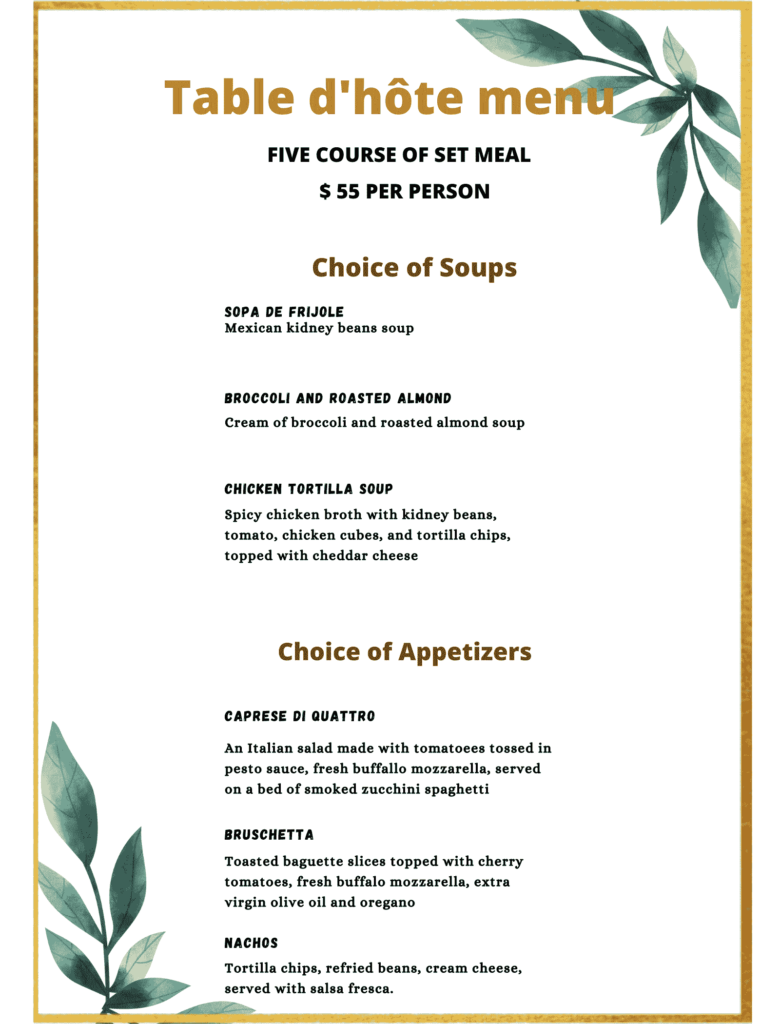
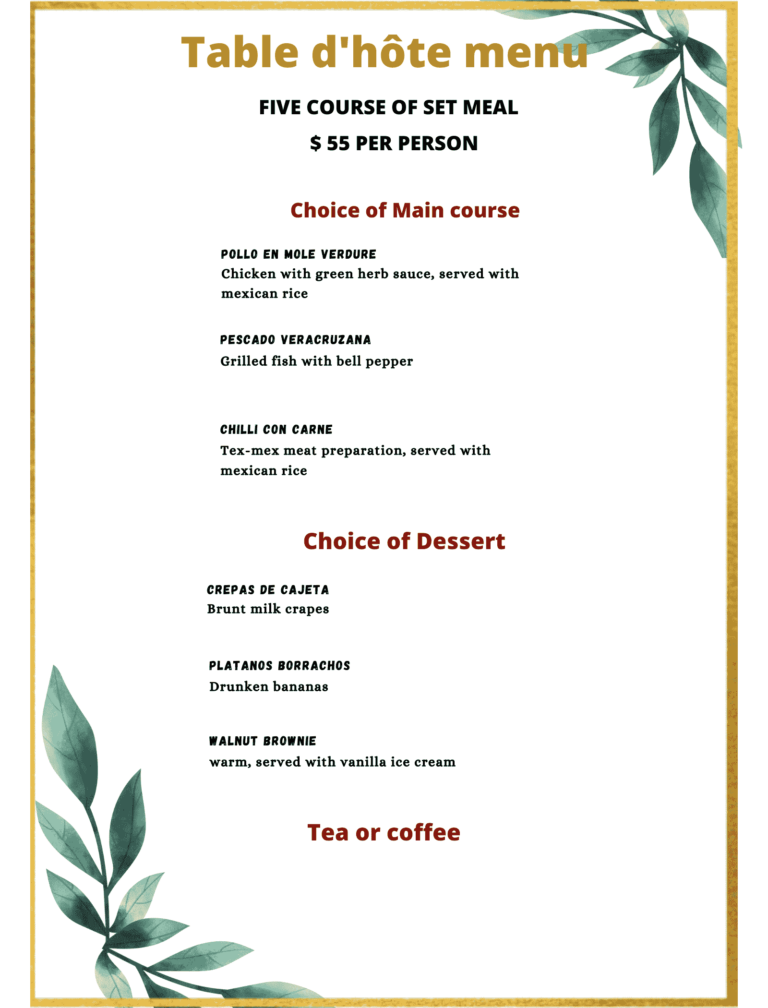
This 5 courses Table d Hote menu offers a complete five-course meal at a fixed price, with limited options for each course. The dishes are designed to showcase high-quality ingredients and complex flavors, focusing on indulgence and culinary expertise. The communal dining experience and the inclusion of a glass of wine or non-alcoholic beverage add to the overall value of the menu. This type of menu is commonly used in fine dining restaurants and can be a great option for special occasions or those looking for a luxurious dining experience.
Getting the pricing strategy right on a table d’hôte menu is the difference between a profitable offering and one that drains your margins. Here’s a step-by-step approach using real numbers.
Example pricing breakdown for a 3-course table d’hôte:
| Course | Food Cost per Plate | Notes |
|---|---|---|
| Starter (choice of 3) | $2.50 – $3.00 | Soups, salads, or small appetizers |
| Main Course (choice of 3) | $4.00 – $5.50 | Protein + sides, slightly smaller portion than à la carte |
| Dessert + Coffee (choice of 2) | $1.50 – $2.00 | Low-cost items that add perceived value |
| Total Food Cost | $8.00 – $10.50 | |
| Menu Price (at 30% food cost) | $27 – $35 | Adjust based on market and positioning |
Ready to add a table d’hôte menu to your restaurant? Here’s a practical, step-by-step process to build one that works for your kitchen, your guests, and your bottom line.
Start by answering two questions: Who is this menu for, and what occasion does it serve? A three-course lunch menu for weekday business diners looks very different from a 5-course seasonal dinner for date-night guests. Your concept drives every decision that follows — dish selection, pricing, portion sizes, and presentation.
Decide how many courses you’ll include. A three-course structure (starter, main, dessert) is the most common and works for most restaurants. For fine dining or special events, a five-course menu (hors d’oeuvre, soup, main course, cheese or palate cleanser, dessert) creates a more full-course dinner experience. Offer two to four options within each course — enough choice to satisfy guests without overloading your kitchen.
This is where food cost control happens. Choose dishes across courses that use overlapping ingredients. If your main course features roasted vegetables, use similar root vegetables in your starter soup. If your dessert includes seasonal berries, use the same berries as a garnish on the appetizer plate. Shared ingredients mean larger bulk purchases, less waste, and simpler menu planning.
Follow the pricing steps from the section above. Calculate food cost per course, apply your target food cost percentage (28–35%), and check the final price against competitor offerings. Make sure the total feels like good value to the guest — they should feel like they’re getting more than they’d get ordering each course separately at à la carte prices.
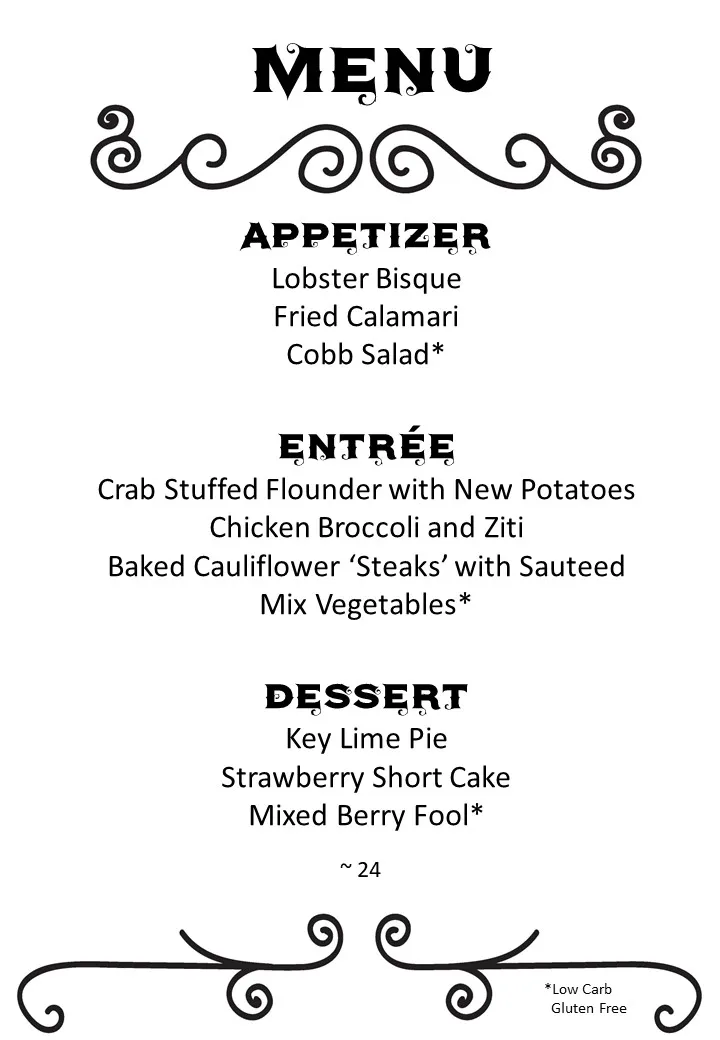
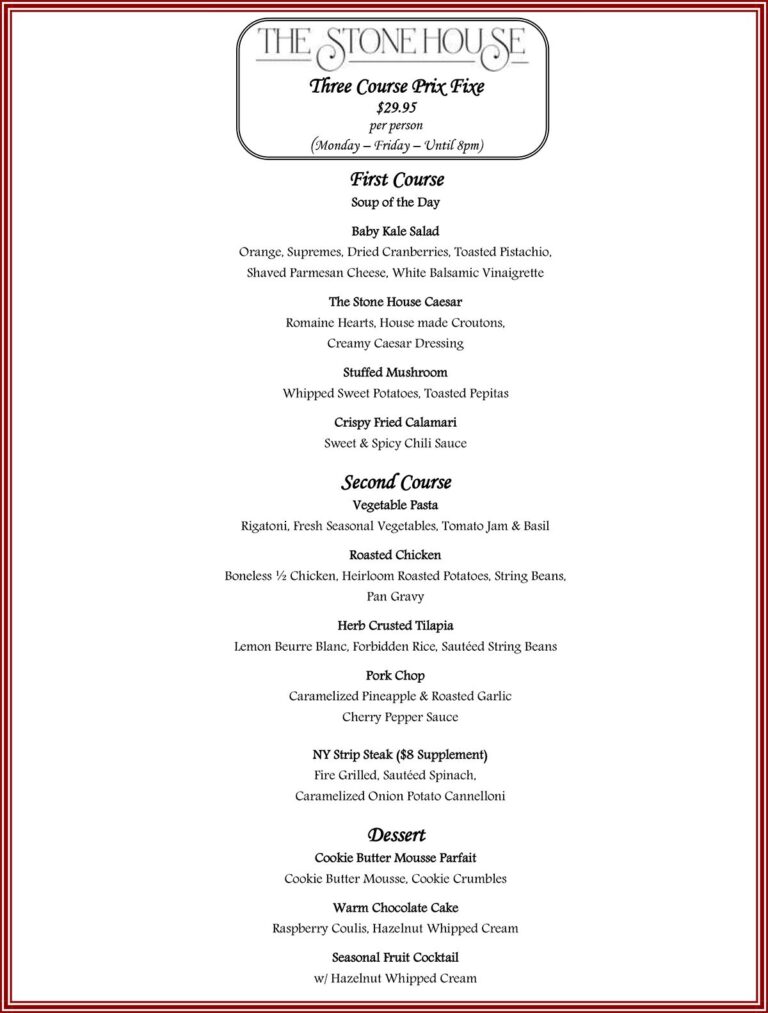
Your table d’hôte menu needs to visually present the fixed price, the courses in order, and the options within each course. Guests should understand the structure at a glance — no confusion about what’s included.
If you change your table d’hôte offerings monthly or seasonally (and you should), printing new paper menus every time gets expensive fast. A digital menu solves this. With a tool like Menubly, you can update your table d’hôte menu instantly — swap out dishes, adjust prices, add seasonal items — without reprinting anything. Your QR code stays the same, and guests always see your current offerings on their phone or tablet. At $9.99/month, it’s a fraction of what monthly reprints cost.
Your servers need to know every dish on the table d’hôte menu — ingredients, allergens, flavor profiles, and portion sizes. With only a few options per course, each server should be able to confidently describe and recommend dishes. Practice specific language: “Our table d’hôte tonight is $38 for three courses. You’ll choose from three starters, three mains, and two desserts. May I walk you through the options?”
Once you implement your table d’hôte menu, run it for two to four weeks before making final decisions. Track which options guests choose most, monitor actual food cost versus your target, and ask for feedback from both staff and diners. Then adjust: replace underperforming dishes, tweak portions, and refine pricing. A good table d’hôte menu improves over time through data, not guesswork. Use menu analysis techniques to make informed decisions.
A table d’hôte menu only works well if it stays updated, looks professional, and is easy for guests to read. The right restaurant technology makes management simple.
A digital menu platform is the most practical tool for restaurants running table d’hôte menus. Because set menus change frequently — new seasonal dishes, adjusted pricing, rotating specials — you need a system that lets you update content instantly. Menubly handles this well: you can organize courses into clear sections, display options within each course, and publish changes to your live menu in seconds. No waiting for a printer, no outdated menus on tables.
A POS system that supports set menu or prix fixe ordering makes service smoother. Your staff selects the table d’hôte, picks the guest’s choices within each course, and the system handles pricing automatically. This speeds up order entry and reduces billing errors.
Since food cost control is one of the biggest advantages of the table d’hôte format, use costing software to track ingredient prices, calculate per-plate costs, and flag when a dish exceeds your target margin. Tools like the recipe cost calculator can help you model different menu scenarios before committing to a final lineup.
If you offer table d’hôte for takeaway or pre-ordering (popular for holiday meals and catering), an online ordering system that handles fixed-price multi-course menus saves time for both you and the customer. Guests select their choices within each course online, and the order arrives in your kitchen ready to prepare.
Not every restaurant benefits from a table d’hôte format. Here’s a quick self-assessment to help you decide.
A table d’hôte menu is a good fit if you:
A table d’hôte menu may not be the best fit if you:
Many restaurants find that offering a table d’hôte alongside their regular à la carte menu works best. It’s worth taking time to explore what format fits your specific service style — you might capture set-menu diners during lunch or special events while keeping full flexibility at dinner.
Table d’hôte is a French phrase that translates to “the host’s table.” It originally referred to communal meals served at French inns where all guests ate together at the innkeeper’s table and were served the same fixed meal.
The correct pronunciation in English is “tah-bluh doht.” The accent mark (circumflex) over the “o” in hôte indicates the historical dropping of an “s” in the original French word “hoste.”
A standard table d’hôte menu includes multiple courses at a single fixed price — typically an appetizer or soup, a main course, and a dessert. Some menus add a salad course, cheese course, or a glass of house wine. Guests usually choose from two to four options within each course.
Yes, a buffet can be considered a variation of table d’hôte. Both offer a selection of food at a predetermined fixed price. The key difference is service style: table d’hôte is served course-by-course at the table, while a buffet presents all dishes at once for self-service.
Both are multi-course meals at a fixed price. The main difference is choice: table d’hôte typically offers guests a selection of dishes within each course (choose one of three starters, for example), while prix fixe often presents a single set sequence with little or no choice. In practice, many restaurants use the terms interchangeably.
Most table d’hôte menus include three to five courses. A three-course structure (starter, main, dessert) is the most common. Fine dining and special occasions may feature five courses or more, adding a soup course, fish course, or cheese plate to the lineup.
Restaurants use table d’hôte menus for special occasions (Valentine’s Day, Thanksgiving, New Year’s Eve), banquets and weddings, hotel dining, cruise ships, and as a fixed-price lunch option during weekdays. In the United States, many restaurants switch to a prix fixe or table d’hôte format specifically for holidays when families dine together.
Yes, but it requires planning. Include at least one vegetarian and one allergen-friendly option within each course. Clearly mark dishes with common allergens (nuts, gluten, dairy) on the menu. Some restaurants add a note that substitutions are available upon request, giving guests confidence that their needs can be met.
Table d’hôte originated in 17th-century France in inns and guesthouses where travelers shared a communal meal prepared by the host. The format spread through French cabarets and traiteurs, became a standard restaurant format by the early 1800s, and reached England and the United States through the 19th century.
By limiting the number of dishes you prepare, you buy fewer ingredients in larger quantities (lowering per-unit cost), reduce waste from unused inventory, and predict your food cost percentage with much greater accuracy. Restaurants that leverage the table d’hôte format well can keep food costs between 28% and 32%, compared to the 30–38% typical for à la carte operations with large menus.
The table d’hôte menu has lasted for over 400 years because the core idea is simple and effective: offer a complete, well-designed meal at one price that works for both the guest and the restaurant. Whether you use it for a weekday lunch special, a seasonal dinner, or a full banquet service, this format gives you tighter control over costs, faster service, and a dining experience that feels planned and professional.
The restaurants that get the most out of table d’hôte are the ones that treat it as a living menu — rotating dishes with the seasons, tracking food costs weekly, and adjusting based on what actually sells.
Menubly gives you an easy-to-use menu builder for multi-course set menus, instant updates when you rotate dishes, and a shareable QR code so guests always see your latest offerings — all for $9.99/month. Try Menubly free for 30 days, no credit card required.