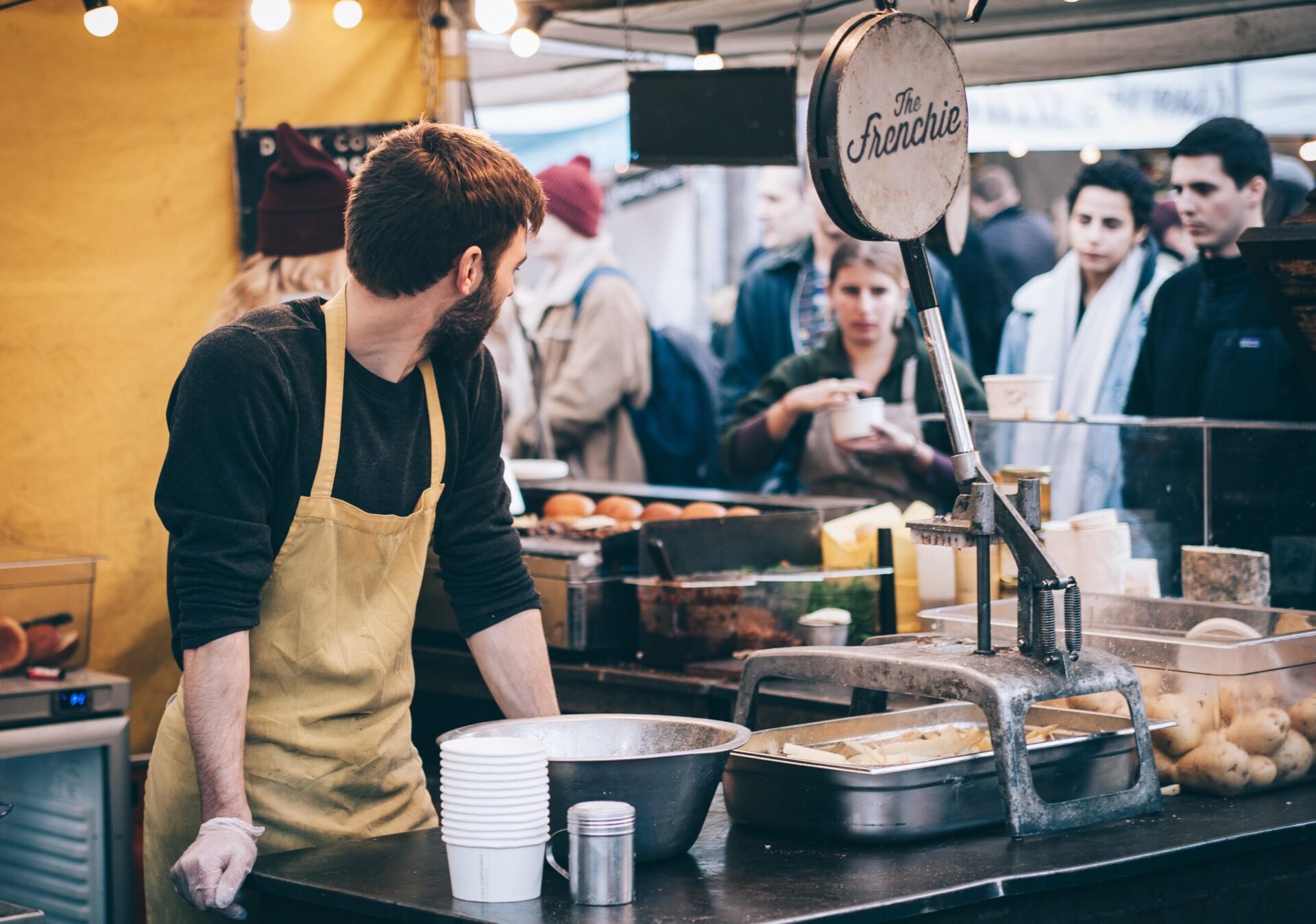
An Eventbrite study found that pop-up dining events grew by 82% in a single year — making them the fastest-growing trend in food and drink. From aspiring chefs testing a new cuisine to established restaurant owners launching a second concept, pop-up restaurants have become one of the most accessible ways to break into the food industry without the six-figure investment a traditional restaurant demands.
Pop-up restaurants are temporary dining experiences that operate for a limited time — anywhere from a single night to several months — in a non-traditional space. And because these temporary restaurants run on tight timelines and lean budgets, they’ve attracted a growing wave of food entrepreneurs looking for a lower-risk way to start a pop-up restaurant and turn a culinary idea into a real business.
This guide covers everything you need to know about pop-up restaurants — what they are, how they work, the different types and formats, the advantages and disadvantages, what it costs, and a step-by-step guide to opening one. By the end, you’ll have a clear picture of whether a pop-up restaurant is the right move for your food business.
A pop-up restaurant is a temporary dining establishment that operates for a limited period in a non-traditional or short-term venue, offering a focused menu and a unique and unforgettable experience designed to create buzz and exclusivity.
Unlike a traditional brick-and-mortar restaurant that signs a multi-year lease and builds out a permanent space, a pop-up restaurant works within a fixed window — often a single evening, a weekend, or open for a few months. The venue might be a rented event space, a rooftop, a warehouse, a parking lot, or even the dining room of an existing restaurant during its off-hours. The menu is typically smaller and more focused than what you’d find at a full-fledged restaurant, which keeps food costs down and allows the chef to deliver a tighter culinary experience.
Pop-up restaurants exist because they fill a gap in the restaurant industry. According to the National Restaurant Association, starting a restaurant costs $175,000 to $750,000 on average, and roughly 60% of new restaurants fail within their first year. Pop-ups give restaurateurs a way to test a restaurant concept, build a following, and collect real customer feedback — all before making that kind of financial commitment.
| Feature | Pop-Up Restaurant | Traditional Restaurant |
|---|---|---|
| Startup Cost | $1,500–$20,000 | $175,000–$750,000 |
| Launch Timeline | 2–8 weeks | 6–18 months |
| Location | Temporary, flexible | Fixed, long-term lease |
| Menu | Focused, limited items | Full menu with many categories |
| Commitment | Days to months | Years (lease + buildout) |
Pop-up restaurants, food trucks, ghost kitchens, and virtual restaurants all offer alternatives to a traditional brick-and-mortar restaurant — but these business models work differently and serve different purposes. Understanding the differences helps you pick the right model for your goals and budget.
A pop-up restaurant is a temporary dining concept that operates in a borrowed or rented space for a limited time, with a focus on creating a unique, event-driven experience. A food truck is a mobile food business that operates from a vehicle, serving customers at different locations on a daily or weekly rotating schedule. A ghost kitchen (also called a cloud kitchen or virtual restaurant) is a delivery-only kitchen with no dine-in space — all orders come through online platforms.
Each model suits a different type of food entrepreneur. Pop-ups are ideal for testing a new concept or building buzz before opening a permanent location. Food trucks work best for operators who want daily mobility and direct street-level access to customers. Ghost kitchens are built for delivery-focused brands that don’t need a customer-facing dining area.
| Model | Location | Duration | Customer Experience | Best For |
|---|---|---|---|---|
| Pop-Up Restaurant | Rented or borrowed spaces | One night to a few months | Dine-in, event-driven | Concept testing, buzz building |
| Food Truck | Mobile, rotating spots | Ongoing daily operation | Quick-service, walk-up | Daily sales, street presence |
| Ghost Kitchen | Shared or private kitchen | Ongoing, lease-based | Delivery only, no dine-in | Delivery-focused brands |
| Traditional Restaurant | Fixed commercial space | Multi-year lease | Full dine-in experience | Established brand, full service |
For the rest of this guide, we’ll focus specifically on pop-up restaurants — their types, how they work, and how to launch one.
Operating a pop-up restaurant follows a shorter, more focused version of the process behind starting a restaurant from scratch. Here’s the general flow of pop-up restaurant operations from concept to closing night:
Not every pop-up restaurant looks the same. The format you choose affects your budget, timeline, and the kind of pop-up restaurant experience you create. Here are the six most common types of pop-up restaurants.
A chef takeover happens when a guest chef takes over an existing restaurant’s kitchen for one or more nights, offering a completely different menu and dining experience. This format works well for chefs who want to build their reputation without renting their own space. The host restaurant benefits from fresh energy and new customers, while the guest chef gets a fully equipped kitchen and a built-in audience.
Supper clubs are invite-only or membership-based dining events, often held in private homes, lofts, or other non-commercial spaces. The locations are sometimes kept secret until the last moment, which adds to the exclusivity. This format has roots going back to the 1960s and has seen a major revival among food-focused communities looking for intimate culinary experiences outside of traditional restaurants.
This is the most common type for aspiring restaurateurs. A concept testing pop-up runs for a few weeks to a few months and is specifically designed to validate a restaurant idea before committing to a permanent location. Operators use this format to test menu pricing, gauge customer demand, and work out operational issues. It’s a real-world proof of concept.
These pop-ups operate at food festivals, farmers’ markets, sporting events, or community gatherings. They typically run for a single day or weekend and use tents, booths, or portable kitchen setups. Event-based pop-ups are a great way to reach large crowds with high foot traffic and test your food with a broad target audience.
Food brands, beverage companies, and catering companies use pop-up restaurants as marketing tools. The goal isn’t always direct profit — it’s brand awareness, product sampling, and creating shareable moments for social media. These pop-ups tend to have higher production budgets and focus heavily on design and atmosphere.
Some established restaurant owners use their own space to host pop-up events — testing a new menu concept, running a themed night, or featuring a different cuisine on off-peak nights. This keeps the venue busy during slow periods and lets the operator experiment with new menu ideas without opening a separate location.
| Type | Typical Duration | Venue | Investment Level | Best For |
|---|---|---|---|---|
| Chef Takeover | 1–3 nights | Existing restaurant | Low ($500–$3,000) | Chefs building a name |
| Supper Club | Recurring events | Private homes, lofts | Low ($500–$2,000) | Intimate, exclusive dining |
| Concept Testing | Weeks to months | Rented commercial space | Medium ($3,000–$20,000) | Validating a restaurant idea |
| Event / Festival | 1–3 days | Festival grounds, markets | Low ($1,000–$5,000) | Reaching large crowds |
| Brand Activation | Days to weeks | Custom venues | High ($10,000+) | Brand marketing, PR |
| Within Existing Restaurant | 1 night–ongoing | Own restaurant | Low ($500–$2,000) | Testing new menu concepts |
Pop-up restaurants offer a set of advantages that make them attractive to both first-time food entrepreneurs and experienced restaurant owners. Here’s what successful pop-up restaurants provide and why so many operators choose this model.
The most significant advantage of a pop-up restaurant is the cost. While opening a restaurant the traditional way costs $175,000 to $750,000, a pop-up can launch for as little as $1,500 to $20,000 depending on the format and duration. You avoid long-term leases, expensive buildouts, and heavy equipment purchases — the three biggest line items in a traditional restaurant budget.
A pop-up is the most practical way to test a new restaurant concept in the real world. You get direct feedback from actual paying customers — what they order, what they skip, what they rave about. This is a working proof of concept that tells you whether your idea has legs before you sign a 5-year lease.
The temporary, limited-time nature of a pop-up creates a natural sense of urgency. People want to try it before it’s gone. This drives word-of-mouth, social media sharing, and local press coverage in a way that a standard restaurant opening rarely does. Smart operators use this buzz to build an email list and social following that carries over to their next venture.
Without the constraints of a permanent menu, a long-term lease, or an established brand identity, pop-up restaurants give chefs and owners full creative freedom. You can experiment with a new cuisine, a bold theme, or an unconventional format. If something doesn’t work, you adjust for the next event — there’s no sunk cost holding you to a failing concept.
Pop-ups let you show up where your target audience already gathers — food festivals, busy neighborhoods, event venues, or even inside other restaurants. You’re not waiting for customers to find you. You’re going to them. This is especially valuable for operators who want to test demand in a specific area before committing to a location.
A traditional restaurant takes 6–18 months to open. A pop-up can go from concept to opening night in 2–8 weeks. This speed matters if you want to take advantage of a seasonal opportunity, a trending food concept, or a venue that’s available for a limited window.
Many successful permanent restaurants started as pop-ups. The pop-up-to-permanent pipeline is a proven path in the restaurant industry, and it’s a key reason the idea of starting a pop-up appeals to so many aspiring restaurateurs. It lets you build a customer base, refine your operations, and demonstrate demand to investors or landlords — all before taking on the financial risk of a full buildout.
Pop-up restaurants aren’t without challenges. A pop-up restaurant may face legal issues, cash flow problems, and operational hurdles that traditional restaurants handle differently. Understanding the trade-offs upfront helps you plan around them and avoid the most common pitfalls.
Because pop-up restaurants operate for a short window, you have limited time to build repeat business and customer loyalty. A diner who loved your food might not have a chance to come back. The workaround is to capture contact information — email addresses, social media follows, phone numbers — so you can stay connected and bring them to your next event or your permanent location down the road.
Temporary food service permits can be confusing, and specific requirements vary widely by city and state. You may need a temporary food establishment permit, a business license, food handler certifications, liability insurance, and fire safety approval. Research your local restaurant licenses early — at least 4–6 weeks before your planned opening — because delays are common.
Unlike a permanent restaurant with daily revenue, a pop-up’s income is concentrated into a short period. If turnout is lower than expected on a key night, you may not have time to recover. Ticket-based or pre-order models help reduce this risk by locking in revenue before the event, but building a profitable business on inconsistent cash flow requires careful planning.
If your pop-up location isn’t a fully equipped kitchen, you’ll need to source and transport kitchen equipment, tables, chairs, and service ware. This adds cost and logistical complexity. Renting equipment or partnering with a venue that already has a kitchen can reduce this burden significantly.
With a short window to fill seats, your marketing has to work fast. You don’t have months to build awareness — you need to generate buzz and drive bookings in a matter of weeks. A strong social media presence, an email list, and a professional digital presence are critical. The good news is that the right digital tools make this much more manageable, even on a tight budget.
Now that you understand what pop-up restaurants are, the different types, and the trade-offs involved, let’s get into the practical side — what it costs, how to launch one step by step, and the tools that make it easier.
Pop-up restaurant costs vary widely depending on the format, location, and duration. A one-night supper club in a borrowed space might cost under $2,000, while a multi-week concept testing pop-up in a rented commercial kitchen could run $10,000–$20,000. Here’s a breakdown of typical costs.
| Category | Low-End | High-End |
|---|---|---|
| Venue Rental | $500 | $5,000/month |
| Permits & Insurance | $200 | $1,500 |
| Kitchen Equipment (Rental) | $300 | $3,000 |
| Initial Food & Supplies | $300 | $3,000 |
| Marketing & Promotion | $100 | $2,000 |
| Technology (POS, Digital Menu) | $10 | $200 |
| Total Startup | $1,410 | $14,700 |
| Category | Monthly Range |
|---|---|
| Rent / Venue | $500–$5,000 |
| Food & Beverage | $1,000–$5,000 |
| Labor | $1,000–$4,000 |
| Marketing | $100–$1,000 |
| Technology & Software | $10–$200 |
Technology is one of the most controllable cost categories. A restaurant POS system and digital menu platform are must-haves, but costs vary widely. Third-party delivery apps charge 15–30% commission on every order, which can eat thousands of dollars from your revenue each month. Choosing tools with flat monthly pricing instead of percentage-based fees makes a big difference to your bottom line — especially for a pop-up where every dollar counts.
If you’re ready to open a pop-up restaurant, this step-by-step guide walks you through the process. Starting a pop-up restaurant is one of the fastest ways to turn a food concept into a real dining experience — here’s how to do it in eight steps.
Start by answering one question: what do you want this pop-up to accomplish? Are you testing a new restaurant concept before opening a permanent location? Building buzz for an existing brand? Experimenting with new menu ideas? Your goals shape every decision that follows — from the venue to the menu to how long you stay open.
Your concept should have a clear hook. A specific cuisine, a seasonal theme, a collaboration with a local farm, or a unique dining format all give people a reason to show up. The more specific and memorable your pop-up concept is, the easier it is to market.
You don’t need a 50-page document. A pop-up restaurant business plan should cover your concept, target audience, budget, pricing strategy, and success metrics. Write down your expected costs, how many covers you need to break even, and what “success” looks like — whether that’s profit, customer feedback, press coverage, or proof of concept for investors.
Your pop-up restaurant location directly affects your foot traffic, costs, and customer experience. Choosing a location is one of the most important decisions — look for spaces that match your concept and are accessible to your target audience. Options include shared commercial kitchens, bars or restaurants available during off-hours, event spaces, outdoor markets, and retail storefronts between tenants.
Check for practical details: Is there access to running water and electricity? Is there enough space for a dining area and kitchen setup? Does the venue have existing furniture, or do you need to bring your own?
Every pop-up restaurant needs proper permits and insurance, even if you’re only open for one night. At minimum, you’ll likely need a temporary food service permit, a business license, food handler certifications for your staff, and general liability insurance. Some cities also require fire safety inspections and alcohol permits if you’re serving drinks.
Contact your local health department and city clerk’s office early. Permit processing times vary, and delays can push back your opening. Budget 4–6 weeks for this step.
A pop-up menu should be tight. Five to ten items is the sweet spot for most formats. A limited menu keeps your food costs predictable, speeds up kitchen operations, and lets your team execute at a higher level. Focus on dishes that showcase your concept and can be prepared consistently with the equipment available at your pop-up location.
Price your menu items to cover food costs (aim for 28–35% food cost percentage) while staying competitive for your market. A pricing strategy that balances value and profitability is critical when you have a short window to generate revenue.
Printing paper menus for a temporary restaurant is a waste of money — and if you change your menu between events, you’re reprinting every time. A digital menu solves this. Customers scan a QR code at the table and see your full menu on their phone. You can update prices, descriptions, or availability instantly without reprinting anything.
For online ordering, avoid third-party delivery apps that charge 15–30% commission on every order. On $10,000 in monthly orders, that’s $1,500–$3,000 going to the platform instead of your pocket. Menubly gives you a professional QR code menu, commission-free online ordering, and a simple restaurant website — all for $9.99/month with no long-term commitment. For a pop-up restaurant that might only run for a few weeks, that flexibility matters. You can set up your menu in minutes, generate a QR code for your tables, and start taking orders the same day.
Start marketing 3–6 weeks before opening night. Post behind-the-scenes content on Instagram and TikTok — menu development, venue setup, team introductions. Reach out to local food bloggers and publications. Create an event page on ticketing platforms if you’re selling tickets.
The key is creating a sense of urgency. Limited seating, limited dates, and limited-time menu items all drive people to book early rather than wait. Use email marketing and restaurant marketing strategies that make the most of your short promotional window.
On opening night, focus on two things: delivering a great dining experience and gathering data. Track which menu items sell best, which get sent back, and what customers say in person and online. Ask guests for email addresses and social media follows. Take photos and video for future marketing.
After your pop-up ends, review everything. What worked? What didn’t? Use those insights to improve your next pop-up, adjust your concept, or make informed business decisions about opening a permanent location. The data you collect here is what sets your pop-up restaurant up for success — whether that means running another event or making the jump to a permanent space.
The right tools help a pop-up restaurant run smoothly without adding permanent overhead. Here are the five technology categories every pop-up operator should consider.
Every pop-up needs a restaurant POS system to process payments and track sales. For pop-ups, a mobile POS that runs on a tablet or phone is usually the best fit. Look for systems with no long-term contracts — many restaurant POS providers offer pay-as-you-go pricing that works well for temporary restaurants. Square, Toast, and Clover all offer portable options.
A digital menu is one of the most practical tools for a pop-up restaurant. You can update your menu in real time — mark items as sold out, change prices, add daily specials — without printing a single piece of paper. And the QR code stays the same even when the menu changes, so you never need to reprint table cards or signage.
If you’re taking online orders, the math matters. Third-party delivery platforms charge 15–30% commission. On $15,000 in monthly revenue, that’s $2,250–$4,500 gone to commissions. Menubly charges $9.99/month flat with zero commission on orders — keeping that revenue in your business. For a pop-up restaurant running on thin margins, that difference is significant.
Instagram, TikTok, and email are the primary marketing channels for most pop-up restaurants. Tools like Later or Buffer help you schedule posts in advance. Mailchimp or ConvertKit handle email lists. These tools are low-cost or free and give you a social media marketing system that punches above its weight.
If your venue doesn’t have a full kitchen, look into equipment rental companies. Many cities have commercial kitchen rental services where you can rent cooking equipment, refrigeration, and service ware by the day or week. This avoids the capital cost of buying equipment you may only use once or twice.
If your pop-up takes reservations, use a free or low-cost booking tool. Google Forms works in a pinch, but tools like Resy, OpenTable, or Yelp Reservations give a more professional experience. For ticket-based pop-ups, platforms like Eventbrite or Tock handle ticket sales and guest management.
Yes — and it happens more often than you might think. The pop-up-to-permanent path is one of the most common ways successful restaurant owners get their start, and it’s become a recognized strategy across the national restaurant industry.
PopUp Bagels started as a preorder pop-up concept and has grown into a chain with 13 locations. Ludo Lefebvre ran Ludobites, a series of pop-ups across Los Angeles, before opening his acclaimed permanent restaurant Trois Mec. Astral, a taco and pastry pop-up in Portland, Oregon, earned a spot on multiple “best new restaurants” lists before landing a permanent residency.
The pop-up model works as a launchpad because it gives you three things investors and landlords want to see: proven customer demand, a refined concept, and operational experience. If you’re planning to turn your pop-up into a permanent restaurant, think of each event as a soft opening — a chance to test, learn, and build toward a permanent online presence.
Signs you might be ready to go permanent:
Pop-up restaurants can run anywhere from a single night to several months. Most operate for one to four weeks. The duration depends on the format — a chef takeover might be a single evening, while a concept testing pop-up could run for two to three months to gather enough data and customer feedback.
Yes. Most cities require a temporary food service permit, a business license, food handler certifications, and liability insurance. If you’re serving alcohol, you’ll need a separate liquor license or temporary alcohol permit. Requirements vary by location, so contact your local health department at least 4–6 weeks before your planned opening.
They can be. Pop-up restaurants have lower startup costs and operational costs than traditional restaurants, which means you can reach profitability faster. Ticket-based and prix fixe models help lock in revenue before the event. The key factors are keeping your food cost percentage under 35%, minimizing overhead, and filling seats consistently.
Startup costs typically range from $1,500 to $20,000. A one-night supper club in a borrowed space could cost under $2,000, while a multi-week pop-up in a rented commercial kitchen might run $10,000–$15,000. The biggest cost drivers are venue rental, food and supplies, equipment, and marketing.
A pop-up restaurant is a temporary dining establishment that’s open to the public, often marketed through social media and ticketing platforms. A supper club is a more intimate, private dining event — usually held in a home or private space, with guests invited through personal networks or memberships. Supper clubs are a specific type of pop-up, but not all pop-ups are supper clubs.
In some areas, yes — but regulations vary widely. Many cities have cottage food laws or home kitchen permits that allow food preparation and sales from a residential kitchen. However, hosting paying diners in your home may require additional permits for occupancy, fire safety, and food safety. Check your local regulations before planning a home-based pop-up.
The best pop-up menus are focused and executable. Choose dishes you can prepare consistently with limited equipment and staff. Street food, tacos, pasta, ramen, BBQ, and prix fixe tasting menus all work well. Avoid complex dishes that require specialized equipment or long prep times. A limited menu of 5–10 items keeps food costs down and quality high.
The most effective channels are Instagram, TikTok, local food blogs, and email lists. The temporary nature of a pop-up creates a natural sense of urgency — people don’t want to miss a limited-time dining experience. Partnering with local influencers, getting covered by local publications, and using ticketing platforms for advance sales all help drive bookings.
Now you know about pop-up restaurants — what they are, how they work, the different types, and what it takes to launch a successful pop-up restaurant. Whether you’re testing a new restaurant concept, building a brand, or working toward a permanent location, the combination of lower startup costs, creative freedom, and built-in buzz makes pop-ups a practical first step for aspiring restaurateurs and an effective growth tool for established restaurant owners.
The operators who succeed with pop-ups are the ones who plan smartly, keep their menus focused, and use affordable digital tools to look professional without the overhead of a permanent restaurant.
Ready to launch your pop-up restaurant? Menubly gives you a professional digital menu, QR codes, and commission-free online ordering — all for $9.99/month with no long-term commitment. Try Menubly free for 30 days, no credit card required.