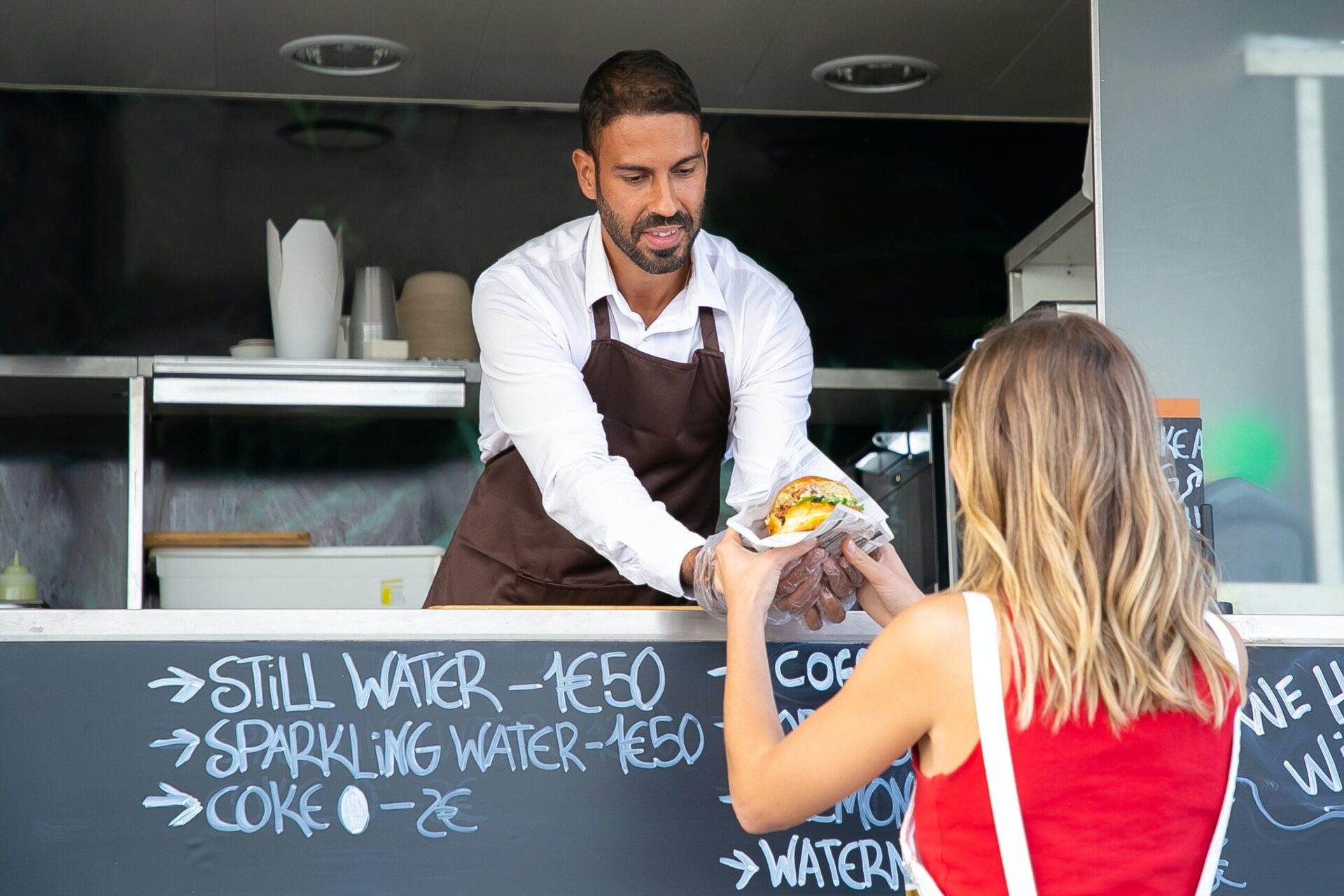
Food truck marketing is the combination of strategies and tactics mobile food vendors use to attract customers, communicate locations, build brand recognition, and drive sales—all while operating without a fixed address. Unlike traditional restaurants that can rely on walk-by foot traffic and consistent signage, food truck owners face a unique challenge: your customers need to find you before they can buy from you.
The US food truck market has grown to $1.16 billion in 2026, with projections reaching $1.59 billion by 2031 at a 6.53% CAGR. With over 92,257 food truck businesses now operating across the country—a 23.8% CAGR increase from 2020 to 2025—competition for hungry customers has never been fiercer. The good news? The post-pandemic outdoor dining surge has added +1.8% to industry growth, and 63.6% of operators report peak business during evening hours, showing strong consumer demand for mobile food options.
Whether you’re working with a tight marketing budget or ready to invest in growth, this marketing guide covers everything you need to know: from social media marketing and location-based tactics to building customer loyalty and establishing a strong online presence. Each strategy is designed specifically for the realities of running a mobile business—because generic restaurant marketing advice just doesn’t cut it when your address changes daily.
What Is Food Truck Marketing?
Food truck marketing is a specialized form of food service promotion that focuses on location communication, mobile brand building, and customer engagement strategies designed for businesses without permanent addresses. It combines traditional marketing principles with tactics unique to the mobile food industry, where success depends on your ability to tell customers where you’ll be and give them a reason to seek you out.
The food truck industry has grown dramatically, with industry revenue reaching $2.8 billion in 2026 and mobile employment up 907% since 2000 to 44,119 jobs. This growth means more competition, making effective marketing essential for any food truck owner who wants to stand out.
Key Components of Food Truck Marketing
- Location Communication: The most critical element—letting your target audience know where to find your food truck today, tomorrow, and next week
- Social Media Presence: Using social media platforms like Instagram, Facebook, and TikTok to share updates, food photos, and build community
- Brand Identity: Creating a memorable look and voice that customers recognize from across a parking lot
- Online Presence: Establishing digital touchpoints through Google Business Profile, menu websites, and food truck apps
- Customer Engagement: Building relationships that turn first-time buyers into loyal regulars who follow your schedule
- Event Marketing: Securing spots at food festivals, local events, and private catering opportunities
- Loyalty Programs: Encouraging repeat business through rewards, exclusive offers, and VIP treatment
What makes food truck marketing different from standard restaurant marketing is the mobility factor. Trailers hold 42.85% of the market share, while fast food concepts lead at 47.10% of offerings—but regardless of your setup or cuisine type (even vegan concepts growing at 11.10% CAGR), your marketing must solve the “where are you?” problem that brick-and-mortar restaurants never face.
Why Food Truck Marketing Is Different From Restaurant Marketing
If you’ve ever tried applying standard restaurant marketing advice to your food truck business and felt like something was off, you’re not wrong. The fundamental differences between fixed-location restaurants and mobile food operations require completely different marketing approaches.
The South region holds 35.80% of the food truck market share, with Texas averaging $437K in revenue per truck. Meanwhile, the West is growing at 6.70% CAGR. But regardless of where you operate, the challenges remain the same: you can’t rely on customers simply walking past your location because that location changes constantly.
Key Differences: Food Truck vs. Restaurant Marketing
| Aspect |
Food Truck Marketing |
Restaurant Marketing |
| Location |
Changes daily or weekly; requires constant communication |
Fixed, permanent; customers know where to find you |
| Customer Discovery |
Social media, food truck apps, word of mouth, online search |
Signage, local SEO, walk-by foot traffic, directories |
| Operating Hours |
Variable, weather-dependent, event-based |
Consistent, published schedule |
| Marketing Budget |
Typically limited; owner-operated marketing |
More established budgets; dedicated staff possible |
| Brand Touchpoints |
Truck wrap, social media, packaging, online menu |
Interior design, signage, ambiance, full website |
| Customer Relationship |
Must actively maintain contact to stay top-of-mind |
Can rely on regulars returning to same location |
The real-time nature of food truck marketing sets it apart. When a restaurant posts about a daily special, customers can plan to visit anytime during business hours. When you post about your location, that information has a shelf life of hours, not days. This creates both challenges and opportunities—your marketing must be more frequent, more immediate, and more location-focused than any brick-and-mortar establishment.
Independent operators represent 85.6% of the food truck market, which means most food truck owners handle their own marketing. Understanding these differences helps you focus your limited time and marketing budget on tactics that actually work for mobile businesses.
Essential Food Truck Marketing Strategies That Actually Work
With the unique challenges of marketing a mobile food business in mind, let’s break down the food truck marketing strategies that deliver real results. These aren’t theoretical concepts—they’re proven tactics used by successful food truck owners across the country.
Mid-size trucks (16-25 ft) dominate 50.25% of the market share, but regardless of your truck size, these marketing strategies apply. The key is choosing strategies that match your capacity, target market, and available time.
Top 10 Food Truck Marketing Strategies
- Social Media Marketing: Your primary tool for location updates, food photography, and building a following. Instagram, Facebook, and TikTok allow you to reach new customers and keep existing ones informed about where to find your food truck.
- Location-Based Marketing: Using food truck apps, GPS tools, and consistent schedule communication to solve the “where are you?” problem that every mobile business faces.
- Google Business Profile Optimization: Free visibility in “food trucks near me” searches. Essential for helping hungry customers find your food truck through local search.
- Brand Identity Development: Your truck wrap, logo, packaging, and overall visual identity make you memorable and recognizable. A strong food truck brand consists of consistent visual elements across all touchpoints.
- Online Presence and Menu Website: A professional online menu for food trucks gives customers a way to browse your offerings, share your food truck with friends, and find you through search engines
- Customer Loyalty Programs: Punch cards, digital rewards, or simple VIP treatment that encourages repeat business and builds your customer base.
- Event and Catering Marketing: Food festivals, local events, corporate catering, and private parties expand your reach and revenue streams.
- Email and SMS Marketing: Direct communication with customers who want to know your location without relying on social media algorithms.
- Community Partnerships: Collaborating with local businesses, breweries, and complementary vendors to reach new customers.
- Review and Reputation Management: Actively managing your presence on Yelp, Google, and social platforms to build trust with potential customers.
The best part? Most of these effective marketing strategies can be implemented with minimal cost. The following sections break down each strategy in detail, with specific tactics you can implement this week.
Social Media Marketing for Food Trucks
For food truck operators, social media isn’t just a nice-to-have—it’s your primary marketing tool. When 63.6% of operators report peak evening hours, your social media presence becomes the bridge between hungry customers and your location.
Franchises are growing at 7.86% CAGR from a 14.4% share, and many credit consistent social media marketing for their expansion. Whether you’re an independent operator or building a branded marketing presence, mastering social media platforms is non-negotiable for food truck success.
Best Social Media Platforms for Food Trucks
Instagram is the top platform for most food truck owners. Its visual focus makes it perfect for photos of your food, and Stories provide real-time location updates that disappear after 24 hours—ideal for daily schedule changes. The platform’s food-focused culture means users actively search for delicious food options to try.
Facebook remains valuable for event promotion, community groups, and reaching an older demographic. Facebook Events let you create listings for your appearances at food festivals and local events, making it easy for followers to save dates and get reminders.
TikTok offers viral potential for creative content. Behind-the-scenes videos of food preparation, customer reactions, and day-in-the-life content can reach thousands of new customers organically. The platform rewards authenticity over polish, making it accessible for busy food truck owners.
Twitter/X works well for quick location updates and engaging with local food communities, though its importance varies by market.
What to Post: Content Ideas for Food Truck Social Media
- Daily location announcements with address, hours, and any special notes
- High-quality photos of your food (your most important visual marketing)
- Behind-the-scenes content showing food preparation and truck life
- Customer features and user-generated content (with permission)
- New menu items and limited-time specials
- Event announcements for upcoming food festivals or private bookings
- Staff spotlights and founder stories that humanize your brand
- Reposted reviews and positive customer feedback
- Menu highlights with descriptions that make people hungry
- Weather-related updates (closing for rain, extending hours for nice weather)
How Often Should Food Trucks Post on Social Media?
For location-based businesses, consistency matters more than volume. A realistic posting schedule for busy food truck owners:
- Instagram: 1-2 feed posts per day; Stories multiple times daily (especially location updates)
- Facebook: 1 post per day; update Events weekly
- TikTok: 2-4 videos per week if you have time; quality over quantity
The most important post? Your daily location update. Make this non-negotiable—post it at the same time each day so followers know when to check.
Food Truck Instagram Tips
Food Photography Basics: Natural lighting is your friend. Take photos near windows or outdoors. Shoot from above for flat items (tacos, bowls) and at angle for items with height (burgers, sandwiches). Clean backgrounds let your food shine.
Hashtag Strategy: Use a mix of broad and specific hashtags. Include: #foodtruck, #streetfood, your city name + foodtruck (like #austinfoodtruck), your cuisine type, and neighborhood-specific tags. Research what hashtags your target audience follows.
Stories for Location Updates: Create a Story template with your location information. Add location stickers, interactive elements (polls, questions), and always include how long you’ll be there.
Reels Ideas: Quick recipe reveals, satisfying food prep videos, customer testimonials, “day in the life” content, and before/after truck setup videos perform well.
Pro tip: Include a shareable menu link in your Instagram bio so followers can always access your current menu items and share your offerings with friends. This single link becomes a central marketing hub—tools like Menubly let you create an interactive online menu that showcases your dishes beautifully while capturing customer attention and encouraging repeat visits.
Location-Based Marketing Tactics for Mobile Food Vendors
The defining challenge of food truck marketing is simple: customers can’t visit you if they can’t find you. Location-based marketing solves this problem through multiple channels, ensuring your target customers always know where to find your food truck.
With over 48,000 trucks operating nationwide, standing out requires more than just showing up. You need a systematic approach to location communication that reaches customers wherever they’re searching.
How to Share Your Food Truck Location
Successful food truck operators use social media to broadcast their location, but smart marketing means using multiple channels so customers can find you regardless of how they search. Your location communication strategy should include:
- Social Media Posts and Stories: Daily updates on Instagram, Facebook, and Twitter with exact address, hours, and how long you’ll be there
- Food Truck Finder Apps: Listings on platforms where customers actively search for mobile food options
- Your Website or Menu Page: A dedicated schedule or location page that’s always current. A one-page website can centralize all important information about your food truck into one accessible link, making it easy for customers to find your location, view your menu, book a table, and access your social media profiles—all in one place.
- Email/SMS Alerts: Direct messages to subscribers who’ve opted in for location updates
- Google Business Profile: Updated hours and location posts for search visibility
Food Truck Finder Apps and Platforms
List your food truck on these platforms to increase visibility:
- Roaming Hunger: Large food truck marketplace connecting trucks with customers and event organizers
- Street Food Finder: GPS-based app helping customers locate nearby food trucks in real-time
- Local Apps: Many cities have their own food truck tracking apps—research what’s popular in your market
- Google Maps: Your Google Business Profile appears in Maps searches for “food trucks near me”
- Yelp: Keep your service area updated for local food searches
Digital POS apps have driven a +0.9% CAGR impact on the industry, showing how technology adoption improves food truck operations and customer experience.
Creating a Consistent Schedule Strategy
While spontaneity has its charm, predictability helps customers plan visits. Consider establishing:
- Anchor Locations: Regular spots on specific days (like “Tuesdays at the downtown office park”) that customers can count on
- Weekly Rotation: A consistent weekly schedule that repeats, making it easy for regulars to find you
- Published Schedule: A weekly or monthly calendar posted on your website and social media
- Regular Events: Ongoing commitments at breweries, farmers markets, or business complexes
The goal is balancing flexibility (responding to weather, opportunities, and demand) with predictability (giving customers confidence they can find you). Even if you can’t commit to the same schedule every week, posting your upcoming locations at the start of each week helps customers plan.
Having a consistent URL—like a dedicated menu website—gives customers one reliable place to bookmark and check for updates, rather than hunting across multiple social platforms. By adding this link in your Instagram bio and other social media profiles, you make it easy for customers to discover and engage with your restaurant through a single, convenient link.
Building Your Food Truck Brand Identity
Your food truck is a rolling billboard, and brand identity is what makes people remember you after they’ve passed. In a market with over 92,257 food truck businesses, a strong food truck brand consists of visual elements and personality that set you apart from every other truck at the festival.
Independent operators (85.6% of the market) have an advantage here: you can create a brand that reflects your personal story, cuisine passion, and personality without corporate constraints. That authenticity resonates with the modern food truck consumers who seek unique dining experiences.
Elements of Food Truck Brand Identity
- Business Name: Memorable, easy to spell, searchable online, and available on social media platforms
- Logo: Simple enough to recognize from a distance, works in multiple sizes and formats
- Color Scheme: 2-3 core colors that appear on your truck, packaging, social media, and website
- Typography: Consistent fonts for menus, signage, and digital presence
- Imagery Style: How you photograph food, the filters you use, your overall visual aesthetic
- Brand Voice: How you communicate—casual and fun, sophisticated and foodie-focused, family-friendly, etc.
- Key Messages: What you want customers to know about your food, story, and values
Food Truck Wrap and Design Tips
Your truck wrap is the single largest brand investment most food truck owners will make—and it’s worth getting right. Consider these best practices:
- Readability from Distance: Your name and core offering should be visible from 50+ feet away
- Service Window Visibility: Don’t obstruct the window; design around it
- Contact Information: Include social media handles and website prominently
- Food Photography: If including images, use professional photos that make food look appetizing
- Consistent on All Sides: Your truck has multiple sides; consider views from all angles
- Weather Durability: Invest in quality materials that withstand sun, rain, and frequent cleaning
Work with a designer who has food truck or vehicle wrap experience. Provide examples of brands you admire and be clear about your target audience and positioning.
Maintaining Brand Consistency
Your brand should be recognizable across every customer touchpoint:
- Truck Exterior: The foundation of your visual brand
- Menu Boards: Same fonts, colors, and design style as your truck
- Packaging: Boxes, bags, napkins, and utensils that extend your brand
- Social Media: Profile photos, Story templates, and post design that match your visual identity
- Website/Online Menu: Same colors, fonts, and imagery style as your physical presence
- Staff Appearance: T-shirts, hats, or aprons that reinforce your brand
When a customer sees your Instagram post and then spots your truck at a festival, they should immediately make the connection. That consistency builds brand recognition and trust.
Online Presence and Digital Marketing for Food Trucks
Beyond social media, your broader online presence determines whether customers can find you through Google, share your menu with friends, or learn about your food truck before visiting. Digital marketing for food trucks doesn’t require complex technology—but it does require showing up where customers are searching.
The food truck industry has grown significantly, and digital tools have kept pace. A professional online presence is no longer optional—it’s expected by customers researching where to eat.
Google Business Profile for Food Trucks
Setting up Google Business Profile (formerly Google My Business) is free and essential for local search visibility. Here’s how to optimize it for a mobile food business:
- Business Category: Select “Food Truck” or “Mobile Food Service” as your primary category
- Service Area: Define the geographic area you serve rather than a fixed address
- Photos: Add high-quality images of your truck, food, and menu board. Update regularly.
- Menu: Add your menu items with descriptions and prices
- Hours: Keep hours updated; if you operate variable schedules, note that in your description
- Posts: Use Google Posts to share location updates, specials, and events
- Reviews: Actively manage and respond to all reviews
When someone searches “food trucks near me” or “tacos near me,” your Google Business Profile is what appears. This free marketing tool directly connects you with hungry customers actively looking for food.
Does Your Food Truck Need a Website?
The short answer: yes, some form of web presence beyond social media is valuable. Here’s why:
- Search Engine Visibility: A website or menu page ranks in Google, helping new customers find you
- Permanent Link: Unlike social posts that disappear, a website gives you a consistent URL to share
- Marketing Amplification: Every time a customer shares your menu link, you’re gaining free word-of-mouth marketing. An SEO-optimized menu page helps your food truck appear at the top of search results when potential customers search for food options in your area
- Menu Access: Customers can browse your food truck menu before visiting, increasing confidence and reducing line times. An interactive online menu lets customers browse and interact with your menu offerings, with the ability to filter and search for specific dishes.
- Professional Image: A professional web presence signals legitimacy to event organizers and catering clients
- Information Hub: One place for schedule, menu, contact info, and catering inquiries
A full custom website isn’t necessary for every food truck. Many successful food truck owners using platforms like Menubly to create an one-page website in minutes that provides professional online presence without technical skills or high costs.
Online Menus and QR Codes for Food Trucks
An online menu serves multiple marketing functions and acts as your silent salesperson:
- Link in Bio: Shareable link for Instagram, Facebook, and TikTok profiles
- QR Code Menu Generation: Physical codes on your truck, packaging, or flyers create instant digital connections. Customers can access your menu by scanning a QR code, then easily share it with friends—turning every customer into a potential brand ambassador.
- SEO Benefits: Menu pages with proper optimization rank for searches like “[cuisine type] food truck [city]”—bringing customers directly to you when they’re hungry and searching.
- Easy Updates: Change prices, add new menu items, or mark items as sold out instantly
- Viral Sharing Potential: Customers can easily send your menu to friends when recommending your food truck, exponentially expanding your marketing reach through authentic word-of-mouth.
- Commission-Free Online Ordering: Enable customers to order directly from your restaurant without intermediaries, helping you reduce dependency on third-party delivery platforms that eat into your profits with hefty commission fees.
Place QR codes on your truck window, packaging, business cards, and any printed materials. They bridge the physical and digital experience, making it easy for customers to access your full menu and share it with others.
Local SEO Basics for Food Trucks
Local SEO helps you appear when customers search “food trucks near” their location. Basic steps:
- Claim and optimize your Google Business Profile
- Ensure your business name, phone, and service area are consistent across all platforms
- Include location keywords on your website (the cities and neighborhoods you serve)
- Get listed in local food directories and food truck apps
- Encourage customers to leave Google reviews mentioning your cuisine and locations
Managing Online Reviews
Reviews on Google, Yelp, and Facebook influence whether new customers try your food truck. Best practices:
- Ask Happy Customers: A simple “If you enjoyed your meal, we’d love a Google review” works
- Respond to All Reviews: Thank positive reviewers; address concerns professionally in negative reviews
- Never Argue: Keep responses polite even when reviews seem unfair
- Learn from Feedback: Reviews often reveal operational improvements
- Monitor Regularly: Set up alerts so you know when new reviews appear
Customer Loyalty and Retention Programs for Food Trucks
Building repeat customers is harder when you don’t have a fixed location for regulars to visit. But it’s also more valuable—loyal customers who follow your schedule and seek out your truck are worth far more than one-time buyers.
Corporate contracts add +1.2% CAGR to the food truck industry, showing the revenue potential of loyal business relationships. The same principle applies to individual customers: turning first-time buyers into regulars who target your truck specifically drives sustainable growth.
Food Truck Loyalty Program Ideas
Physical Punch Cards: The classic approach works. Give customers a card, punch it with each purchase, and offer a free meal or discount after a set number of visits. Keep it simple—10 punches for a free item is easy to understand.
Digital Loyalty Apps: Platforms like Stamp Me, Loyalzoo, or Square Loyalty track purchases automatically. Customers don’t need to remember a card, and you get data on customer behavior and visit frequency.
Simple VIP Treatment: Sometimes loyalty doesn’t need formal programs. Remembering regular customers by name, adding an extra side, or previewing new menu items for familiar faces builds relationships without additional systems.
Choose a program that matches your capacity. A busy food truck owner can’t manage complex tier systems, but a simple punch card or digital program adds value without overwhelming your operations.
Building an Email and SMS List
Email and SMS marketing give you direct access to customers who want to hear from you—no algorithm required. Building your list:
- At the Window: Simple signup sheet or tablet where customers enter their phone/email
- QR Code Signup: Physical code linking to a signup form
- Social Media Promotion: Regularly promote your list with an incentive (first to know locations, exclusive specials)
- Website Signup: Form on your menu page or website
What to Send:
- Weekly schedule announcements
- Special location alerts (appearing at popular spot, extended hours)
- New menu items or limited-time specials
- Event announcements and catering availability
- Exclusive offers for subscribers
Frequency: Email weekly or bi-weekly; SMS only for important updates (1-2 times weekly max). Respect your list—too many messages leads to unsubscribes.
Creating Community Around Your Food Truck
Beyond transactions, build relationships that make customers feel like part of your truck venture:
- Feature Customers: Share photos of regulars (with permission) on social media
- Name Items After Regulars: “The Dave Special” for a customer’s custom order creates belonging
- Engage on Social: Respond to comments, share customer posts, participate in conversations
- Create Exclusivity: Early access to new menu items or secret menu items for followers
- Share Your Story: Let customers know the person behind the truck—your journey, your passion for the food you serve
The personal connection possible with a food truck is a competitive advantage restaurants can’t easily match. Use social media to maintain that connection between in-person visits.
Event Marketing and Catering Promotion for Food Trucks
Events serve dual purposes for food truck businesses: they’re revenue opportunities and marketing exposure. A single food festival can introduce your truck to hundreds of new customers who might follow you to regular locations afterward.
With over 48,000 trucks operating nationwide, event competition exists, but so does opportunity. Food festivals, local events, corporate catering, and private parties represent significant revenue streams beyond daily street service.
Types of Events for Food Trucks
- Public Events: Food festivals, farmers markets, street fairs, concert venues, sporting events
- Private Events: Weddings, birthday parties, graduation celebrations, company picnics
- Corporate Events: Office lunch service, employee appreciation days, corporate parties, business park rotations
- Venue Partnerships: Breweries, wineries, event spaces seeking regular food service
- Community Events: School functions, church gatherings, neighborhood block parties
How to Get Your Food Truck Booked for Events
Finding Opportunities:
- Follow local event pages and community calendars
- Join food truck associations in your region
- List on booking platforms like Roaming Hunger
- Network with other food truck owners who may pass along opportunities
- Connect with event planners, wedding coordinators, and corporate event organizers
- Reach out directly to breweries, wineries, and venues in your area
Pitching Your Food Truck:
- Maintain a professional online presence with clear menu items, photos, and contact information
- Create an event-specific info sheet with your setup requirements, menu options, and pricing
- Have references or testimonials from previous events ready
- Respond quickly to inquiries—event planners work on tight timelines
- Be flexible on menu customization for specific event needs
Marketing at Events:
- Collect email addresses with signup incentives
- Share live content on social media during events
- Include your social handles and website on all packaging
- Encourage customers to share photos and tag your truck
- Have business cards or flyers with your regular schedule available
Promoting Your Food Truck Catering Services
Catering often provides higher margins than street service with guaranteed revenue. To market catering:
- Create Catering Packages: Predefined options at different price points make it easy for clients to choose
- Dedicated Catering Page: Include catering information on your website or menu page
- Promote on Social: Share photos from catering events (with client permission)
- Target Local Businesses: Direct outreach to corporate offices, HR departments, and event coordinators
- Wedding Market: Connect with wedding planners and list on wedding vendor directories
A professional online menu with clear catering information is essential. Event planners and corporate clients need to see your offerings and share them with decision-makers before booking.
Low-Budget Marketing Ideas for Food Trucks
Lower costs compared to brick-and-mortar restaurants fuel entrepreneurship in the food truck space—and that budget consciousness should extend to marketing. You don’t need a large marketing budget to effectively market your food truck; you need consistency, creativity, and strategic use of free tools.
These food truck marketing ideas cost little to nothing beyond your time investment:
Free Marketing Tactics
- Optimize Your Google Business Profile: Completely free and directly impacts local search visibility. Update regularly with photos, posts, and accurate information.
- Post Consistently on Social Media: Use social media platforms daily for location updates and food photography. The only cost is your time.
- Encourage and Respond to Reviews: Ask satisfied customers to leave Google or Yelp reviews. Respond to all reviews to show engagement.
- Partner with Local Businesses: Cross-promote with breweries, shops, or complementary food trucks. Park near businesses that share your target audience.
- Leverage User-Generated Content: Encourage customers to share photos and tag you. Repost their content (with credit) for authentic social proof.
- Build Your Email/SMS List: Collect contact information at the window. Free email platforms like Mailchimp work for small lists.
- Engage in Community Groups: Participate in local Facebook groups and neighborhood apps where people ask for food truck recommendations.
- Local Media Outreach: Pitch your story to local food bloggers, newspaper food sections, and local news. A feature costs nothing but can reach thousands.
Low-Cost Marketing Investments
- Create Instagram-Worthy Moments: Add a photo backdrop, interesting serving presentation, or unique packaging that customers want to share.
- Referral Incentives: Offer a discount or free item when customers bring friends. The cost is only the discount on a new customer.
- Strategic Sampling: Give small samples at events or to neighboring businesses to create word-of-mouth buzz.
- Menu Board and Signage Optimization: Clear, attractive menu boards reduce ordering friction and can highlight high-margin menu items.
- Business Cards and Flyers: Small investment for something customers can take and share.
- Professional Online Menu: A dedicated menu website is one of the highest-ROI marketing investments for food trucks. It costs less than custom website development but provides professional online presence, shareable links that amplify word-of-mouth marketing, and SEO benefits that bring new customers to you. Tools like Menubly let you create a food truck website completely free with basic features, and you can enhance it with a built-in interactive online menu feature for just $9.99 per month—making it an affordable marketing tool that pays for itself by attracting just a few additional customers each week
The key is choosing 2-3 tactics and executing them consistently rather than trying everything at once. A solid marketing strategy that you actually implement beats an ambitious plan that gets abandoned.
Now that you understand the core food truck marketing strategies, let’s look at the tools, metrics, and common pitfalls that will help you implement them effectively. The following sections cover practical resources for executing your marketing plan, measuring what’s working, and avoiding costly mistakes.
Food Truck Marketing Tools and Technology
The right marketing tools make implementation easier without requiring technical expertise or significant investment. Here are the essential categories of tools that support effective marketing for food trucks, organized by function.
Online Menu and Website Tools
Your online presence starts with somewhere customers can find your menu and information:
- Menubly: Purpose-built for food service businesses, Menubly provides professional menu websites without technical skills. Features include QR code generation, SEO-optimized pages that rank in Google, instant menu updates, shareable links for social bios, and online ordering capabilities. More affordable than custom development and easier than general website builders—ideal for food truck owners who need professional online presence without complexity.
- Squarespace/Wix: General website builders with food templates; require more setup time and ongoing maintenance
- Facebook Page Only: Free but unprofessional and limited in functionality; not recommended as primary presence
Social Media Management
- Buffer: Schedule posts across platforms; free tier available
- Later: Visual planning for Instagram; free tier available
- Meta Business Suite: Free management for Facebook and Instagram
- Canva: Free design tool for creating social graphics, menus, and marketing materials
Email and SMS Marketing
- Mailchimp: Free for small lists; email campaigns with templates
- Constant Contact: Email marketing with event promotion features
- EZTexting: SMS marketing platform for location alerts
Loyalty Programs
- Square Loyalty: Integrates with Square POS; digital punch cards
- Stamp Me: Digital loyalty cards; affordable monthly pricing
- Physical Punch Cards: Low-tech but effective; print from any local shop
POS Systems
- Square: Popular choice for food trucks; free reader, pay per transaction
- Toast: Food-specific POS with strong reporting
- Clover: Flexible system with various hardware options
Ready to establish your food truck’s online presence? Menubly makes it easy to create a professional menu website that helps customers find you, browse your menu, and share your offerings—all without technical skills or big budgets.
Measuring Your Food Truck Marketing Success
You don’t need complex analytics to measure food truck marketing—you need to track indicators that connect marketing activities to actual sales. Keep it simple and actionable.
Key Metrics to Track
Social Media Metrics:
- Follower count growth (month over month)
- Engagement rate on posts (likes, comments, shares)
- Reach on location update posts specifically
- Stories views for daily location announcements
Google Business Metrics:
- Profile views per week
- Direction requests (people clicking for directions to you)
- Phone calls from profile
- Website clicks from profile
Website/Menu Page Metrics:
- Total page views
- Most viewed menu items
- Referral sources (where visitors come from)
Sales Correlation:
- Daily revenue by location—which spots perform best?
- Revenue correlation with specific marketing activities
- Sales on days you posted vs. days you didn’t
Customer Metrics:
- Repeat customer estimate (regulars you recognize)
- Email/SMS list growth
- Customer feedback and comments
Review Metrics:
- Number of new reviews per month
- Average rating trend
- Review content themes (what customers mention)
Simple Tracking Methods
- Spreadsheet Tracking: Simple daily log with location, revenue, and marketing notes
- POS Reports: Use your Square or Toast reports for sales data
- Platform Insights: Instagram, Facebook, and Google all provide free analytics
- Weekly Review: 15 minutes weekly to review what worked and what didn’t
Track consistently over time rather than obsessing over daily numbers. Patterns become clear over weeks and months, helping you make informed decisions about where to park your food truck and what marketing activities drive results.
Common Food Truck Marketing Mistakes to Avoid
These pitfalls waste time and money—and they’re easy to fall into when you’re busy cooking and serving. Here’s what to avoid:
- Inconsistent Location Updates: Skipping days or posting late trains customers to stop checking. If you say you’ll post your location daily at 10am, do it daily at 10am.
- Ignoring Google Business Profile: Free visibility in local search, yet many food truck owners never claim or update their profile. Set it up and update it weekly minimum.
- Poor Quality Food Photos: Blurry, dark, or unappetizing photos hurt more than no photos. Learn basic food photography or designate time when lighting is good.
- No Online Menu Presence: Relying on menu boards alone means customers can’t preview offerings, share your menu, or find you through search. A professional menu website solves this quickly.
- Inconsistent Branding: When your truck, social media, and packaging look like different businesses, you’re losing brand recognition opportunities.
- Not Building a Contact List: Depending entirely on social media algorithms for reach is risky. Build email and SMS lists you control.
- Trying to Be Everywhere: Mediocre presence on five platforms is worse than strong presence on two. Focus your social media marketing on platforms where your target customers actually spend time.
- Ignoring Negative Reviews: Unresponded complaints signal you don’t care. A professional response shows you’re listening and working to improve.
- Not Tracking Results: If you don’t know which locations or marketing tactics work best, you can’t optimize. Simple tracking beats no tracking.
- Copying Restaurant Marketing: Generic advice for brick-and-mortar doesn’t fit mobile operations. Adapt strategies to your unique situation.
Most mistakes stem from inconsistency or neglect—not wrong strategies. The food truck marketing strategies in this guide work when applied consistently over time.
Food Truck Marketing Plan Template
A solid food truck marketing plan doesn’t need to be complex—it needs to be realistic for your time and actually get implemented. Use this framework to organize your approach.
1. Goals and Target Customers
Define what you’re trying to achieve:
- Revenue goal: $_______ per month
- Customer goal: _______ transactions per day average
- Growth goal: _______ new social followers per month
Define your target customers:
- Who are they? (office workers, families, foodies, late-night crowds)
- Where do they work/live?
- When are they looking for food?
- What social media platforms do they use?
2. Brand Identity Summary
- Food truck name: _______
- Tagline/description: _______
- Core colors: _______
- Brand voice (3 words): _______
- Key message to communicate: _______
3. Social Media Plan
- Primary platform: _______ (usually Instagram)
- Secondary platform: _______
- Posting frequency: _______
- Daily location post time: _______
- Content types to include: _______
4. Location Communication Plan
- Where will you post location updates? (list all channels)
- What time each day?
- Who is responsible?
- Do you have regular anchor locations? List them.
5. Online Presence Checklist
- ☐ Google Business Profile claimed and optimized
- ☐ Professional online menu set up (Menubly or similar)
- ☐ Listed on food truck finder apps
- ☐ Yelp profile claimed
- ☐ Social media profiles complete with menu link in bio
6. Customer Loyalty Approach
- Loyalty program type: _______
- Email/SMS collection method: _______
- How will you recognize regulars? _______
7. Event Strategy
- Target number of events per month: _______
- Types of events to pursue: _______
- Catering services offered: yes/no
- Where will you find event opportunities? _______
8. Monthly Action Items
Weekly tasks:
- Daily location posts
- 3-5 food photos
- Respond to comments and messages
- Update Google Business Profile
Monthly tasks:
- Review metrics and performance
- Update menu if needed
- Reach out to event organizers
- Ask for reviews from satisfied customers
9. Budget
- Monthly marketing budget: $_______ (even if $0)
- Where will you invest? _______
10. Metrics and Review
- What metrics will you track? _______
- How often will you review? (weekly/monthly)
Start with the minimum: daily location posts, active Google Business Profile, and professional online menu. Add complexity only after you’ve mastered consistency on the basics.
Final Thoughts
Marketing a food truck successfully comes down to solving one fundamental challenge: helping hungry customers find your delicious food options. Every strategy in this guide—from social media marketing to location-based tactics to building your online presence—serves that core objective.
The most important takeaways for food truck owners:
- Consistency beats perfection. A daily location update and regular social media presence outperforms sporadic brilliance.
- Use multiple channels. Don’t rely on one platform for location communication. Diversify across social media, email, your website, and food truck apps.
- Your truck is your billboard. Invest in brand identity that’s recognizable from across a parking lot.
- Build a professional online presence. Customers research before they visit. Give them a menu website to browse and share.
- Track what works. Simple measurement helps you optimize locations, posting times, and marketing activities.
Start with one or two strategies from this guide and execute them consistently. As those become habit, add more. A new food truck doesn’t need to do everything at once—it needs to build sustainable marketing practices that grow with the business.
The food truck industry continues to grow, with the market projected to reach $1.59 billion by 2031. That growth means opportunity for food truck owners who invest in smart marketing and build strong connections with their customer base.
Ready to amplify your food truck marketing? Menubly makes it easy to create a professional menu website that becomes your most effective marketing tool—helping customers find your food truck through search, browse your menu to build anticipation, and share your offerings with their networks. All without technical skills or big budgets. Transform your mobile business with an always-on marketing asset that works as hard as you do.
Create your food truck menu website with Menubly today. Set up takes less than 5 minutes, requires no technical skills, and transforms how customers experience your truck. Your menu is ready when you are.
👉 Start your 30-day free trial – No credit card required