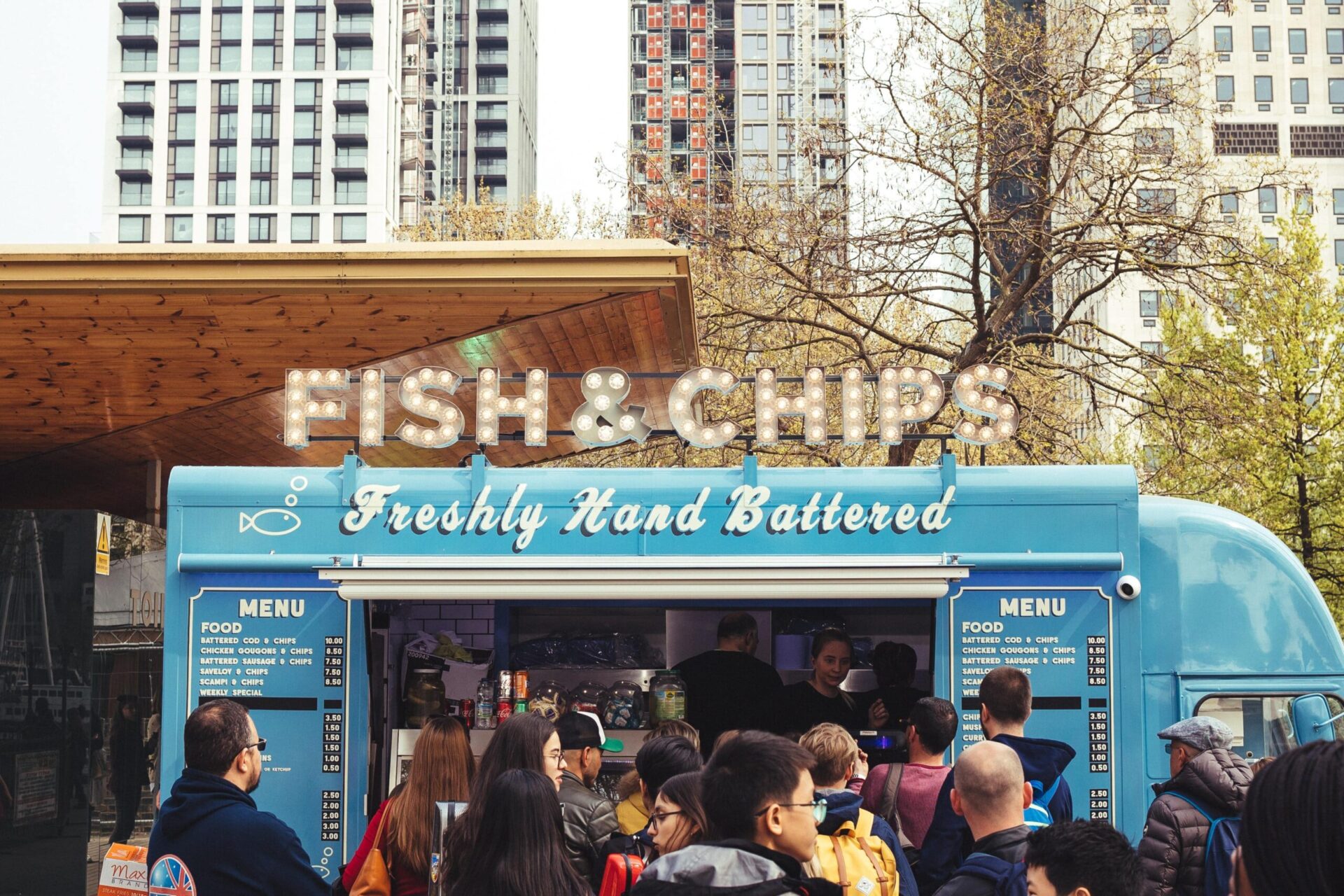
The US food truck industry generates close to $2.8 billion in annual revenue, with nearly 92,000 active food trucks across the country. That’s not a passing trend — it’s a proven business model that lets you open a food truck and serve customers without committing to an expensive lease or full restaurant build-out.
A food truck gives you a fully equipped mobile kitchen on wheels. You cook, you move, you build a following — and you keep far more of your revenue than most brick-and-mortar restaurant owners do.
But starting a food truck business takes more than buying a truck and picking a recipe. You need the right permits, a commissary kitchen, proper equipment, a clear marketing plan, and a way for customers to find and order from you.
Whether you want to learn how to start a food truck from scratch or have been planning it for months, this guide to starting a food truck walks you through the steps to opening a food truck business: what it is, how much it costs, what licenses and permits you’ll need, and a step-by-step checklist to guide you through the process from concept to opening day.
A food truck business is a mobile food service operation that prepares and sells food from a specially equipped vehicle, letting owners reach customers at different locations without the fixed costs of a permanent restaurant.
Unlike a brick-and-mortar restaurant, a food truck doesn’t pay rent on a fixed location. Your “dining room” is wherever you park — a food truck festival, a business district, a college campus, or a private event. Most food trucks do their bulk food prep and storage at a licensed commercial kitchen called a commissary kitchen, then serve directly from the truck during service hours.
The model works because overhead is far lower. You’re not paying $10,000–$30,000 per month on restaurant rent. Your startup investment goes into the truck, equipment, and permits — not a multi-year lease. That’s the core reason why food trucks consistently outperform restaurants on profit margin.
| Feature | Food Truck | Traditional Restaurant |
|---|---|---|
| Startup Cost | $50,000–$250,000 | $175,000–$750,000 |
| Monthly Rent / Overhead | $0 rent (commissary: $500–$2,500) | $10,000–$30,000+ |
| Location | Flexible — changes daily | Fixed |
| Menu Size | Focused (10–15 items) | Large |
| Regulatory Complexity | High (varies by city and state) | High |
| Average Profit Margin | 6–9% | 3–5% |
Not every mobile food business looks the same. The classification of food trucks falls into four main types, each with different startup costs, kitchen capacity, and day-to-day operational requirements — worth understanding before you commit to buying anything.
A standard food truck is a self-contained vehicle with a fully equipped kitchen inside. It’s the most common format: you drive it to your location, park, and serve. Setup costs typically run $50,000–$150,000 depending on whether you buy new or used and what kitchen equipment the truck already includes.
Best for: Operators who want full mobility and a complete kitchen setup in a single vehicle — street vending, rotating locations, and events.
A food trailer is towed by a separate vehicle rather than being self-propelled. Trailers are often cheaper to buy and customize than a full truck — typically $20,000–$80,000 — and offer more interior kitchen space for the same budget. The trade-off is that repositioning takes more planning, and you need a tow vehicle with sufficient capacity.
Best for: Operators who set up at regular, recurring locations like weekly farmers markets or seasonal food truck festivals, rather than moving every day.
A food cart is the lowest-cost entry point in mobile food — often under $10,000. You’re limited on equipment and menu size, but it’s a practical way to test a local food concept before committing to a full truck investment. Carts work best in fixed, high-foot-traffic locations where you can operate consistently.
Best for: Single-item concepts (coffee, hot dogs, tacos, ice cream) in high-pedestrian areas, or operators looking to start small and scale.
Some food trucks are built specifically around catering for private events — corporate lunches, weddings, brand activations, and festivals. The truck itself may look similar to a standard food truck, but the business model prioritizes advance bookings over street vending. Revenue from catering and private events is usually higher per day and far more predictable than street sales.
Best for: Operators who want stable, contract-based income rather than variable daily street revenue.
| Type | Typical Cost | Kitchen Space | Mobility | Best For |
|---|---|---|---|---|
| Standard Food Truck | $50,000–$150,000 | Medium | High | Daily street vending |
| Food Trailer | $20,000–$80,000 | Large | Medium | Recurring event locations |
| Food Cart | Under $10,000 | Minimal | High | Single-item concepts |
| Catering Truck | $50,000–$150,000 | Medium | High | Private events and contracts |
Not sure what to serve? Browse food truck concept ideas for inspiration across cuisines and niches.
Starting a food truck typically costs $50,000–$250,000. Opening a full restaurant usually runs $175,000–$750,000. That gap — often hundreds of thousands of dollars — means less debt, a faster payback period, and considerably less financial risk when you’re getting started. For first-time food business owners, a food truck is one of the most accessible paths into the industry.
You can follow the customers. Park near a construction site or corporate office park at lunchtime, set up at a food truck festival on weekends, and book a private catering event on Friday night. This mobility gives food trucks a real structural advantage over restaurants, which depend entirely on foot traffic at one fixed address.
It also means you can test locations before committing. If a neighbourhood doesn’t perform, you move. A restaurant doesn’t have that option.
Without a restaurant lease, your fixed monthly costs are significantly lower. Your biggest recurring space cost is commissary kitchen rental — typically $500–$2,500/month — rather than $10,000–$30,000/month in restaurant rent. That difference in overhead is the main reason food trucks outperform restaurants on profit margin.
About 60% of food trucks become profitable within their first year, with average profit margins of 6–9% — compared to 3–5% for typical restaurants. With lower fixed costs, you need less monthly revenue to break even, which shortens the road to profitability considerably.
A food truck is one of the smartest ways to test whether a food concept works before signing a long-term restaurant lease. You can refine your menu based on real customer feedback, understand your actual food costs, and build a local following — all with far less capital at risk than a brick-and-mortar restaurant build-out.
Many successful restaurant chains started as food trucks precisely because the mobile business model let them prove demand before investing in a permanent location.
Street vending is just one income source for a food truck. Many food trucks generate the bulk of their annual income through catering contracts and private events, not daily street sales. The most profitable operators build multiple channels: daily street service, catering for corporate events, private party bookings, food truck festivals, and direct online pre-orders. Private events and catering are especially valuable — they’re paid in advance, predictable in volume, and often carry higher per-hour margins than street sales.
Operators who learn to take food pre-orders and catering bookings online directly — without going through a third-party delivery platform — keep the most revenue per order.
No business model is perfect, and a food truck comes with real challenges. Knowing these upfront lets you plan for them rather than get caught off guard.
Food truck regulation is not simple. Depending on where you operate, you’ll need a business license, a mobile vendor permit, food handler certifications, a health department permit, and vehicle registration — at minimum. Many municipalities layer on additional zoning laws and local ordinances governing where trucks can park, how close they can operate near a brick-and-mortar restaurant, and what signage is allowed.
The permit application process takes time and money. Check with your local health department, chamber of commerce, and Department of Motor Vehicles (DMV) to get the specific requirements for your area before you spend anything on equipment.
Mitigation: Start the application process 3–4 months before your target opening date. Permit approvals can take weeks, and some require inspections with limited scheduling windows.
Rain, extreme cold, and summer heat all cut foot traffic directly. A slow day at a street location means near-zero sales — there’s no fixed customer base or reservation system the way a restaurant has. Revenue can swing sharply based on weather, local events, and seasonal slowdowns.
About 30% of food truck operators report cash flow challenges during off-peak seasons, making it important to plan your finances around variable monthly income from the start.
Mitigation: Build catering and private event bookings into your revenue model from day one. A booked event pays regardless of what the weather does.
Your mobile kitchen has physical limits — two or three burners, limited refrigeration, a single sink, and restricted food storage space. This makes a large menu impossible to execute well. Operators who try to offer too many items end up with slower service, more food waste, and more complexity than the kitchen can support.
Mitigation: Aim for 10–12 focused menu items. The best food truck menus are tight, fast to prepare, and designed so dishes share ingredients to keep inventory and cookware requirements manageable.
Your food truck is your kitchen, your storefront, and your motor vehicle all at once. When something breaks — the generator, the refrigeration unit, the engine — you lose business directly and immediately. Unexpected repair costs are one of the most common financial shocks for first-year food truck operators.
Mitigation: Build a dedicated maintenance fund into your monthly budget ($200–$500/month). Schedule regular vehicle inspections and don’t wait until something fails.
This is the requirement that catches many new food truck owners by surprise: in most US states, you are legally required to operate from a licensed commissary kitchen — a commercial facility where you prepare food in bulk, store inventory, handle recycling and waste, and clean your truck’s equipment at the end of each service day. You can’t legally do all your prep at home.
Your health department will require proof of commissary kitchen access as part of the permit and inspection process. Commissary rental costs $500–$2,500/month depending on your city. Some areas have shared commercial kitchen facilities built specifically for food truck operators, which can reduce the monthly fee.
Mitigation: Research commissary options in your city before finalizing your business plan. Factor this recurring cost into your monthly operating budget from day one.
Now that you have a realistic picture of what food truck ownership involves — the real advantages and the real challenges — here’s how to actually get started. The next sections walk you through startup costs, the exact steps to launch day, and the tools that make running your truck manageable.
Starting a food truck typically costs between $50,000 and $250,000 — the truck alone runs $20,000–$200,000 depending on whether you buy new or used, before factoring in kitchen equipment and branding. See our detailed food truck cost breakdown for a deeper look at each expense.
| Startup Expense | Low-End | High-End |
|---|---|---|
| Used food truck | $20,000 | $80,000 |
| New custom truck | $80,000 | $200,000 |
| Kitchen equipment | $5,000 | $15,000 |
| Permits and licenses | $500 | $3,000 |
| Health department permit | $100 | $1,500 |
| Commissary rental (first 3 months) | $1,500 | $7,500 |
| Truck wrap and branding | $2,500 | $10,000 |
| Food truck insurance | $1,000/year | $4,000/year |
| POS system | $500 | $2,000 |
| Initial food inventory and stock | $1,000 | $5,000 |
| Working capital reserve | $5,000 | $15,000 |
| Monthly Operating Expense | Monthly Range |
|---|---|
| Food and ingredient costs | 25–35% of revenue |
| Commissary kitchen rental | $500–$2,500 |
| Fuel | $300–$800 |
| Insurance | $85–$335 |
| Permits (annualized monthly) | $40–$250 |
| Labor (if applicable) | $2,000–$6,000 |
| Truck maintenance fund | $200–$500 |
The biggest recurring cost to watch is food costs — ideally held to 25–35% of revenue. For a truck doing $25,000/month in sales, that’s $6,250–$8,750/month in food expenses alone. Use a free profit margin calculator to model your break-even point before you open, so you know exactly how much you need to sell each month to cover your costs.
Follow these steps in order. The biggest mistake new food truck owners make is rushing through the planning and permit stages to get to the fun parts — and then getting stuck waiting weeks for approvals after they’ve already bought the truck.
Before spending a dollar, research the food truck market in your area. Visit local trucks, food truck festivals, farmers markets, and food parks. Look for underserved cuisines, popular price points, and the locations with the most consistent foot traffic. Understanding your local market tells you whether your concept has real demand — and who you’ll be competing with.
Talk to food truck owners if you can. Most are willing to share what the getting started process actually looked like, and that first-hand information is more useful than any generic checklist. Pay attention to where trucks park, how long lines are, and what price points customers accept without hesitation.
Your food truck concept is the most important business decision you’ll make. Whether you’re a foodie turning a lifelong passion into a business or an entrepreneur looking for the right niche, pick a focused concept — tacos, smash burgers, Thai street food, vegan bowls — and build a menu of 10–12 items you can execute quickly and consistently. Aim for a food cost percentage of 25–35% per item, and design dishes that share ingredients to reduce waste and keep inventory simple.
Smart menu pricing is the difference between a profitable concept and one that perpetually breaks even. Price each item based on food cost, labor time, and local market rates — not just what feels fair. The goal is profitability, not just popularity.
A business plan isn’t a formality — you need to write a business plan before you spend a dollar on equipment. You’ll need it for any bank loan or financing application, and the process forces you to stress-test your numbers before committing real money. A solid food truck business plan covers your concept and niche, target customers, startup cost estimates, monthly operating projections, location strategy, pricing, and a clear path to profitability.
Include a break-even analysis showing exactly how much revenue you need each month to cover your costs. If the numbers don’t work on paper, they won’t work on the street. This is also the document your bank or lender will ask to see — write it as if someone unfamiliar with your concept needs to understand and evaluate it.
Most food truck owners register as either a sole proprietorship or a limited liability company (LLC). An LLC protects your personal assets if the business faces legal or financial problems — which is why most advisors recommend it over a simple sole proprietorship for anyone taking on significant startup debt or risk.
Once you’ve chosen your structure, apply for an Employer Identification Number (EIN) from the IRS — you’ll also need a registered physical address for your business on file. You’ll need the EIN to open a business bank account, file taxes correctly, and apply for most permits. The EIN application is free and takes minutes at IRS.gov.
Funding options for a food truck include personal savings, small business loans, equipment financing (where the truck itself serves as collateral), and — less commonly — crowdfunding. Most banks and credit unions will want to see your business plan before approving a loan. Check with your local Small Business Administration (SBA) office for loan programs available to small food businesses. Your local chamber of commerce can also connect you with regional grants and financing resources specific to your area.
If you’re purchasing a used food truck with equipment financing, factor in the inspection and any required upgrades — lenders typically require the vehicle to meet health and safety standards as a condition of the loan.
This is the step that takes the most time, and the most variation by location. The specific permits and licenses you’ll need depend on your city and state, but expect to apply for at minimum:
Check with your local health department, chamber of commerce, and DMV for the exact food truck license and food permit requirements in your area. Pay attention to your food truck’s zoning requirements too — some cities have local ordinances that restrict where trucks can park and operate. Start the application process at least 3–4 months before your planned opening date — approvals take time, and failing a health inspection after you’ve already bought equipment is an expensive delay.
When you’re ready to purchase your food truck, decide whether to buy new or used. A used food truck ($20,000–$80,000) saves money upfront but may carry more maintenance risk and hidden equipment issues. A new custom truck ($80,000–$200,000) is built to your specifications and comes with warranties, but requires significantly more capital.
Whether you go new or used, have a licensed mechanic and a health inspector look over the vehicle before you finalize any purchase. A truck that fails its health inspection after you’ve bought it is an expensive problem. Once the vehicle clears inspection, you’ll also need to stock it with the right food truck equipment: cooking equipment suited to your menu, proper refrigeration, a three-compartment sink (required by most health departments), cookware, a quality chef’s knife and prep utensils, and a fire suppression system if your local codes require one. You’ll also need to get food inventory and initial stock in place before your first service day — the full equipment and supplies list should come directly from your menu requirements. Every item in your mobile kitchen needs to justify its space.
Most food truck owners focus heavily on the physical setup and underinvest in how customers will actually find and order from them. Here’s a number worth understanding: if you’re taking orders through delivery apps like Uber Eats or DoorDash, you’re paying 15–30% commission on every order. On $30,000/month in sales, that’s $4,500–$9,000 per month going to the app — not to you.
Setting up your own direct ordering channel eliminates this fee completely. A digital menu for food trucks like Menubly lets you accept takeout pre-orders and catering bookings directly from customers at zero commission, for $9.99/month. Customers scan your QR code to browse your menu and place orders without downloading any app. Your Menubly menu link also works as your Instagram and Facebook link-in-bio — one link gives followers your full menu, ordering page, and contact information all in one place.
You can set up an online menu for your food truck in under 30 minutes, and have it ready to share before your opening day.
Your brand is what makes customers remember you and come back. Choose a strong food truck name, design a logo, and create a consistent visual identity across your truck wrap, packaging, and social media profiles. Your truck wrap is your most visible advertising — invest in a design that stands out clearly and communicates what you serve at a glance.
Post your daily location on Instagram and Facebook consistently. Food truck customers follow you on social media specifically because they want to know where you’ll be that day. The most effective marketing tactics for food trucks are location sharing, food photography, and community engagement — a strong food truck marketing strategy built around these three pillars is the most cost-effective way to build a loyal, returning customer base.
Before your official opening day, run one or two soft launch days with a limited crowd — friends, family, and a small local group you invite through social media. This is your chance to test your equipment under real conditions, work out timing and workflow gaps, identify menu items that need adjustment, and get your first reviews.
Gather feedback seriously and fix what’s slow or unclear before you commit to a full schedule. A soft launch that surfaces a timing problem saves you from having that problem discovered publicly during a busy lunch rush. Once your soft launch confirms the concept works, make your opening day official and plan your first month of locations in advance — that’s when you start making real revenue and building your regular customer base.
The right tools reduce your daily workload, help customers find you, and protect your margins. Here’s what a well-run food truck operation uses from day one.
A mobile point-of-sale (POS) system handles payments, tips, refunds, and daily sales reporting. Look for one that works offline in case of poor cell signal, supports credit cards, digital wallets, and cash, and generates end-of-day sales summaries you can use for bookkeeping. Square, Clover, and Toast all offer options built for the speed and simplicity that food truck service requires.
If you’re only taking orders in person, or routing online orders through delivery apps, you’re either missing revenue or giving too much of it away. The math on delivery app fees doesn’t work in your favor at scale: at $1,500/day in revenue with 30% of orders through a delivery app, you’re paying $450/day in commissions — roughly $13,500/month, or over $160,000/year.
A QR code menu with built-in direct ordering eliminates this. Menubly costs $9.99/month and lets customers pre-order from your menu, book catering, and browse your full offering by scanning a code — no app required, zero commission on any order. You can create a QR code for your menu in minutes and print it on your truck, packaging, business cards, and flyers.
Track every expense from the day you open — food costs, fuel, commissary, permits, maintenance, and labor. Most food truck owners use QuickBooks Self-Employed or Wave for bookkeeping. A dedicated food cost calculator helps you verify your margins on each dish and catch ingredient cost increases before they quietly compress your profits.
Instagram and TikTok are consistently the most effective marketing channels for food trucks. Post your daily location, food photos, and short prep videos consistently. Use location tags so local customers can find you, and save your location schedule to a pinned post so followers can plan ahead. Consistent social media marketing builds a reliable audience that shows up regularly — and costs nothing but time.
Set up a free Google Business Profile so customers find you when they search for food trucks in your area. Add your hours, photos, menu link, and service locations. Ask happy customers to leave Google reviews — these drive organic discovery and build trust with new customers who haven’t tried you yet. A profile with 15–20 positive reviews performs significantly better in local search results than a new or empty one.
A food truck is a strong fit for certain types of operators and a poor fit for others. Being honest with yourself about this before committing to the investment saves a lot of time, money, and frustration.
A food truck is a good fit if you:
A food truck may not be a good fit if you:
If budget is your main barrier right now, there are legitimate lower-cost paths into mobile food service — equipment financing, food cart alternatives, and investor partnerships are all worth researching before you rule it out.
Food trucks average $250,000–$500,000 in annual revenue with profit margins of 6–9% — higher than the 3–5% typical for brick-and-mortar restaurants. Owner-operators who run their own trucks tend to see the strongest margins, since labor costs are the largest variable expense after food costs. Most food trucks that reach profitability do so within the first 12 months, provided startup costs were managed carefully.
At minimum, you’ll need a business license, a mobile vendor permit, a food handler certification, a health department permit, and vehicle registration from your DMV. Most cities also require proof of food truck insurance and a commissary kitchen agreement before issuing your operating permits. Requirements vary by location — always verify with your local health department and chamber of commerce before you apply, since missing one permit can delay your entire opening.
In most US states, yes — it’s a legal requirement, not optional. A commissary kitchen is a licensed commercial kitchen where food truck operators do bulk food prep, store inventory, and clean equipment between service days. Your health department will require proof of commissary access as part of your permit application and health inspection process. Commissary rental costs $500–$2,500/month depending on your city. Some cities have shared commissary kitchens specifically for food truck operators, which can lower the monthly cost.
Plan for 3–6 months from your initial decision to opening day. The biggest time variables are permit approvals (which typically take 4–8 weeks), truck customization if you’re ordering a new build (2–12 weeks), and scheduling health inspections. Starting the licensing and permit process before you finalize the purchase of your truck saves the most time — and avoids having idle equipment sitting while you wait for approvals.
It’s possible with the right approach. Equipment financing lets you use the truck as collateral, reducing the cash needed upfront. Other options include partnering with an investor, running a pre-launch crowdfunding campaign, or starting with a lower-cost food cart before scaling to a full truck. Read the full breakdown of strategies to start a food truck with no money for details on each option.
The most consistently profitable food truck categories are tacos and Mexican street food, smash burgers, BBQ, Asian fusion dishes, and specialty desserts. That said, the best concept for your market depends on local demand, competition, and what’s already available in your area. Research gaps in your local food truck scene first — the right niche is one where demand is strong and the competition is manageable, not necessarily the cuisine you love most.
Start with high-foot-traffic areas: business districts at lunch, college campuses, farmers markets, food truck festivals, and construction sites. Research local ordinances and zoning laws before choosing your spots — many cities have designated food truck parking zones and rules about how close you can operate near a brick-and-mortar restaurant. Some cities require a separate street parking permit in addition to your standard operating license, so check with your local municipality before committing to a location plan.
Two things consistently cause the most problems for first-year food truck owners: trying to offer too many menu items (which slows service, increases waste, and makes inventory harder to manage), and routing all online orders through delivery apps (which costs 15–30% of every sale). Keep your menu to 10–12 items and learn how to create a food truck menu built for speed and profitability. Set up your own direct ordering channel early — the commission savings add up to meaningful money within your first month.
Starting a food truck takes real planning — the right permits, a focused concept, and a clear financial picture before you buy anything. But the barrier to entry is considerably lower than a traditional restaurant, and the profit margins can be better too when you manage your costs well.
The one thing that makes the biggest long-term difference: keep your overhead lean. Every percentage point you save on food costs, and every commission you avoid paying to a delivery app, goes directly to your bottom line rather than someone else’s.
Ready to launch your food truck? Menubly gives food trucks a mobile-optimized digital menu, commission-free online ordering, and a QR code your customers can scan on the spot — all for $9.99/month. Try Menubly free for 30 days, no credit card required.